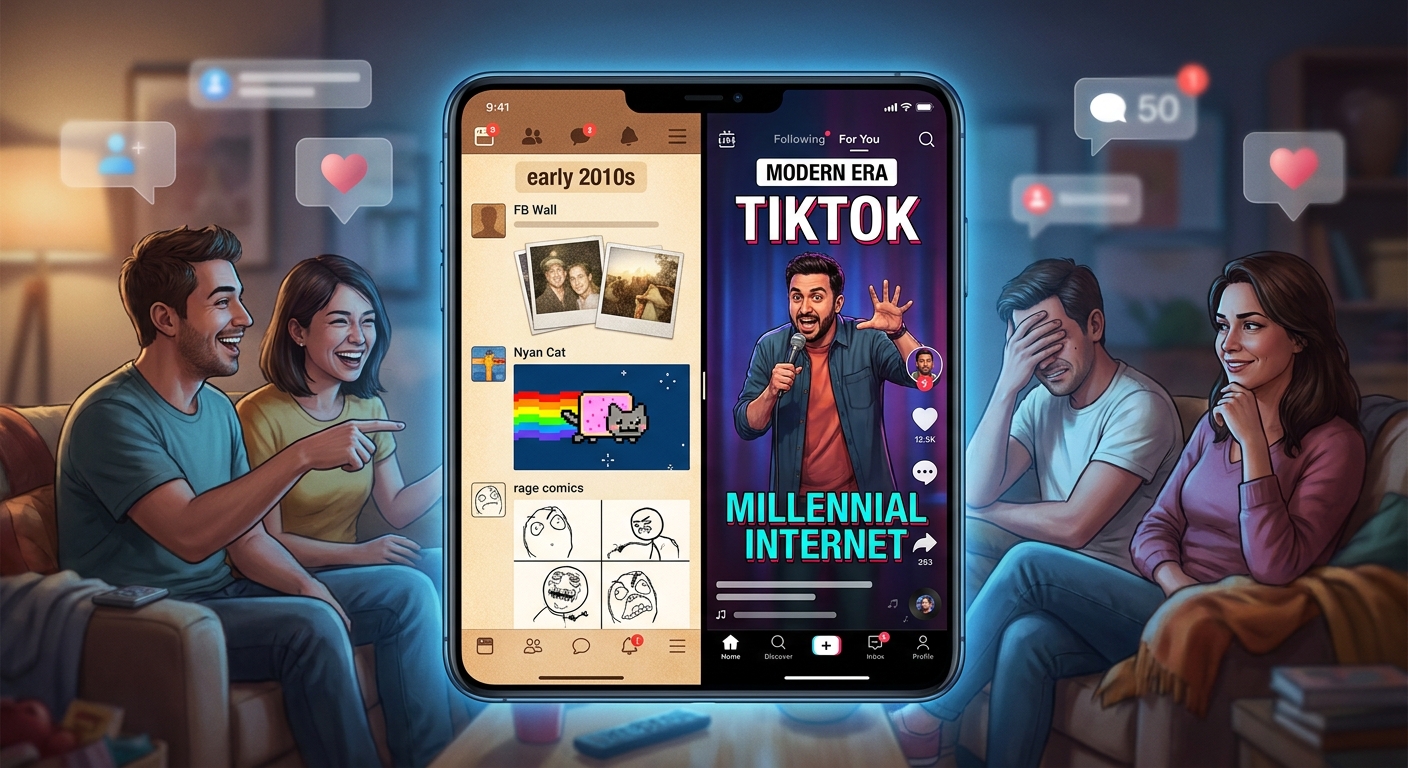
You are not imagining it. A lot of people are staring at the Millennial Internet TikTok viral video and having the same tiny identity wobble. One minute you are online every day. The next, your feed feels like a party where everyone learned a dance, five inside jokes and a new tone of voice without telling you. That is exactly why this sketch hit so hard. It is funny, a little painful, and weirdly comforting all at once. The joke is not just “millennials are old now.” It is about what happens when people who helped build internet culture suddenly feel one update behind on the internet they used to understand instinctively. That “I feel so seen right now” reaction is the whole point. The clip works because it turns low-level online panic into a shared laugh, and once you get the references, it becomes a lot easier to enjoy the meme instead of feeling left out by it.
⚡ In a Hurry? Key Takeaways
- The Millennial Internet TikTok viral video is resonating because it jokes about the very real feeling of aging out of the internet’s latest slang, memes and social rules.
- If you want in on the trend, start by using the audio for a stitch, lip-sync or “things my version of the internet taught me” post instead of trying to copy every joke exactly.
- The value here is simple. This trend gives people a low-pressure way to laugh at online FOMO and connect across age groups instead of feeling embarrassed by not getting every reference.
Why this TikTok hit such a nerve
The best viral jokes usually come from a very specific pain. This one does. The sketch taps into a feeling that is hard to explain unless you have lived online long enough to remember when being “extremely online” used to make you feel current, not slightly lost.
That is why the reaction has been bigger than a normal funny post. People are not just liking it. They are stitching it, quoting it, lip-syncing it and reposting it with captions that basically say, “I thought this was just me.”
The emotional hook is simple. The internet used to feel like a place you could learn once and then keep up with. Now it feels more like fashion. The style changes fast. The jokes mutate hourly. And if you blink, your For You page starts speaking in a dialect you can mostly understand, but not quite.
What “Millennial Internet” actually means
It is not just an age label. It is a whole online operating system.
When people talk about “Millennial Internet,” they usually mean a mix of habits, references and vibes that came from an earlier era of being online. Think forum energy. Think early social media oversharing. Think reaction GIFs, side parts, dramatic punctuation, Facebook-era sincerity, Tumblr-style identity posting, BuzzFeed voice, and the belief that if you know enough references, you are in on the joke.
The TikTok works because it notices that this internet brain never fully went away. It just ran into a newer style of posting that is drier, faster, more layered and sometimes almost aggressively uninterested in explaining itself.
The surface-level joke
At the most basic level, the sketch is making fun of what happens when someone raised on one set of internet rules meets a completely new one. The delivery is familiar. The timing feels right. Then you realize the joke is also about trying too hard not to look dated while still being deeply shaped by the old web.
The deeper joke
The deeper cut is about identity. A lot of people built parts of themselves online. Their humor, taste, politics, friendships, even how they write. So when internet culture shifts, it does not just feel like missing a meme. It can feel like your home turf got renovated while you were still living in it.
Why younger users are sharing it too
This is not only a millennial thing, which is part of why it spread so far. Gen Z and younger users are reposting it because the sketch is also funny from the outside. It lets them watch another generation process digital aging in real time.
But there is something else going on. Younger users know this feeling too, just on a shorter timeline. Online culture now moves so quickly that almost everyone has had a moment of seeing a joke trend explode and realizing they missed the first five chapters.
That is what makes this a rare cross-generational meme. One group sees self-recognition. Another sees a roast. A third sees a format they can reuse for their own version of internet whiplash.
How the trend is evolving beyond the original clip
Once a video hits this kind of nerve, TikTok does what TikTok always does. It turns one joke into ten subgenres.
Stitches and reaction videos
These are the easiest. People stitch the clip with their own “painfully accurate” examples. Sometimes it is about old internet habits. Sometimes it is about not understanding current slang. Sometimes it is just a face of silent devastation followed by “yep.”
Lip-sync versions
These work because the lines already carry the emotion. Users do not need to invent a fresh joke. They just perform the feeling. That is why the trend is so shareable.
Personal spin-offs
This is where the trend gets more interesting. People are using the format to talk about niche corners of the web. Fandom internet. Tumblr internet. Pinterest internet. Vine leftovers. Early YouTube humor. Niche blog culture. Former “I was huge on Twitter in 2017” energy.
That is when the video stops being one creator’s joke and becomes a community language.
If you feel left out by the joke, here is the good news
You do not need to catch every reference to get the point. In fact, not fully getting it is almost part of the experience.
The whole reason the Millennial Internet TikTok viral video is landing is because it names that awkward in-between space. You are online. You are aware. You are not clueless. But somehow there is still a memo you did not receive. The sketch gives that feeling a shape.
That can actually be useful. Once you know the bit is about internet drift, not personal failure, the anxiety drops. You can laugh, lurk, learn the format and jump in when you want.
How to use this trend for your own posts
If you create content, even casually, this trend is a gift. It already has built-in recognition and emotion. You just need a hook that feels personal.
Try the “my internet raised me differently” angle
This is probably the easiest version. Pick three to five old-web habits, references or posting styles that still live in your brain. Keep it honest. The more specific, the funnier it usually gets.
Examples:
“My internet still thinks adding a reaction GIF is elite communication.”
“My internet uses too many ellipses.”
“My internet was trained by Tumblr and now every thought arrives as a thread.”
Use the “I knew it was over when…” format
This works well for people who feel the culture shift but cannot explain it neatly. One clean moment says a lot.
Examples:
“I knew it was over when everyone started using irony so dry I could not tell if they liked the thing.”
“I knew it was over when I needed comment sections to decode the joke.”
Make it niche
Broad jokes get views. Specific jokes get comments. If you can tie the trend to your corner of the internet, people who share that history will show up fast.
Why this feels bigger than one meme
Every so often a viral post does more than entertain. It gives people a way to talk about a weird social shift they have been feeling but have not named yet. That is what is happening here.
Internet culture used to be segmented by platform and subculture. Now everything bleeds into everything. TikTok jokes end up on Instagram repost pages. Tweet formats become audio trends. Tumblr-style sincerity reappears in new packaging. Everyone is borrowing from everyone, and that makes belonging feel less stable than it used to.
The sketch captures that instability perfectly. It is not saying millennials are done. It is saying the internet keeps changing the furniture while we are still in the room.
What to do if your feed suddenly makes you feel 100 years old
First, do not panic. A confusing feed does not mean you are out of touch forever. It usually means the algorithm found a pocket of culture moving faster than usual.
Reset your expectations
You do not need to understand every trend at first glance. No one does. The internet just got better at pretending everyone else got the joke immediately.
Watch the remixes, not just the original
Remixes often explain the trend better than the source. Stitches, duets and quote-posts act like crowd-sourced footnotes.
Participate lightly
You do not need to become a full-time trend analyst. Like a few versions. Save the good ones. Maybe make one post. Think of it less like catching up on homework and more like getting the vibe by osmosis.
At a Glance: Comparison
| Feature/Aspect | Details | Verdict |
|---|---|---|
| Why it went viral | It turns online aging, meme confusion and cross-generational cringe into one very relatable joke. | A rare trend that feels funny and honest at the same time. |
| How people are using it | Through stitches, lip-syncs, niche internet confessionals and “my version of the web” spin-offs. | Very easy to adapt, even if you are not a heavy creator. |
| What it means for viewers | It reframes that left-out feeling as a shared internet experience instead of a personal failing. | Worth watching because it gives you context, not just FOMO. |
Conclusion
The reason this trend matters is not just that the video is funny. It gives people a way to talk about how strange it feels to age in public on the internet, where tastes, jokes and social cues now change at warp speed. That is why the Millennial Internet TikTok viral video is spreading far beyond one app and landing on repost pages, group chats and comment sections full of people saying the same thing. “I feel so seen.” Once you unpack the surface jokes and the deeper ones, the clip stops being just another piece of online FOMO. It becomes a shared reference point, and even a handy template for your own post. That helps the community because it turns confusion into connection. Instead of scrolling past and feeling one step behind, readers can actually understand the meme, join the conversation and use the format in a way that feels natural to them.