Author: ehudsegev

  • This ‘Barack Obama On Beat’ Remix Just Became The Internet’s New Favorite Hype Clip

    This ‘Barack Obama On Beat’ Remix Just Became The Internet’s New Favorite Hype Clip

    Missing the original version of a viral clip is weirdly annoying. You open your feed, see ten people posting the same Barack Obama soundbite over a beat, and suddenly everyone else is in on the joke except you. Then you find a blurry repost with burned-in captions, bad cropping, and no clue where it started. That is exactly what is happening with the Barack Obama viral remix video making the rounds right now.

    Here’s the simple version. The internet’s new favorite hype clip is a remix built around Obama’s calm but punchy delivery, cut so his pauses and emphasis land like part of the song. That contrast is the whole joke and the whole appeal. It feels polished, meme-ready, and oddly motivational at the same time. If you want to enjoy it without digging through junk reposts, the smart move is to find the cleanest source version, then recognize the common edits so you know what people are referencing when they quote it back at you.

    ⚡ In a Hurry? Key Takeaways

    • The Barack Obama viral remix video is trending because his speaking rhythm fits the beat so well that the clip feels both funny and genuinely hype.
    • If you want the real joke, watch a high-quality source upload first, then check the short meme edits people are reposting across TikTok, X, Instagram, and YouTube Shorts.
    • Be careful with random repost accounts. Many crop out context, lower the audio quality, or add fake captions that change what viewers think the clip is about.

    What this clip actually is

    This is not one of those viral moments where the internet loves a clip for no reason. The hook is timing. Obama’s voice has a measured, almost musical cadence already, and whoever cut this remix knew exactly where to place the beat drops and pauses.

    That is why people keep calling it a hype clip instead of just a meme. It lands like a speech, a joke, and a song snippet all at once.

    The result is a short video that works in three different ways. You can laugh at the remix. You can use it as a reaction post. Or you can post it sincerely as a “let’s go” kind of clip. Very few viral edits hit all three.

    Why everyone is suddenly obsessed with it

    There are a few reasons this specific Barack Obama viral remix video is spreading so fast.

    The delivery feels made for remix culture

    Some public figures talk in a way that falls apart the second you add music. This one does the opposite. The pauses, the emphasis, and the clean sentence endings give editors a lot to work with.

    It survives being reposted badly

    Even low-quality versions still kind of work. That matters online. A meme that can survive screen recordings, captions on top of captions, and aggressive compression usually travels far.

    It is easy to quote

    People do not need the whole thing. They just need one line, one pause, or one reaction face from the clip. That makes it ideal for comment sections and inside jokes.

    Where to watch it without wasting time

    If you are trying to find the best version, skip the fifth-generation reposts first. Start with:

    • The earliest high-quality upload you can find on TikTok, X, Instagram Reels, or YouTube Shorts
    • A version with clean audio and no giant meme text covering half the frame
    • Uploads that credit the editor or at least do not crop out the original account name

    If your first search result looks stretched, sounds crunchy, or has three watermarks stacked on top of each other, keep going. That is usually not the version you want.

    A quick search for the exact phrase Barack Obama viral remix video will usually surface better results than searching random quote fragments from the captions.

    The main meme variations you are probably seeing

    Once a clip takes off, the internet starts mutating it immediately. That is part of the fun, but it also makes people lose track of the original.

    1. The clean hype edit

    This is the version most people actually like best. Clear audio. Tight cuts. Beat hits in the right spots. Minimal extra text.

    2. The reaction format

    These reposts slap a caption on top like “me walking into the meeting after doing zero prep” or “when the group chat finally agrees with me.” Same energy, different joke.

    3. The over-edited parody

    This is where creators start adding extra bass, explosion effects, weird zooms, fake audience cheers, or unrelated cutaways. Sometimes funny. Often worse.

    4. The out-of-context political repost

    This is the one to watch for. Some accounts share the clip to stir people up, even when the remix is clearly being enjoyed as a pop culture meme more than a serious political statement.

    Why context matters more than people think

    When a clip gets chopped into tiny pieces, people stop responding to the original moment and start responding to whatever version landed in front of them. That is how internet jokes get confusing fast.

    With this one, the charm is not just the words. It is the rhythm, the calm confidence, and the way the edit turns a familiar voice into something that feels new for ten seconds. If you only hear a low-quality repost with half the timing wrecked, you are missing the part everyone is reacting to.

    How to tell if you found the “real” version

    You probably found a strong source version if:

    • The audio sounds balanced instead of distorted
    • The cuts match the beat cleanly
    • The frame is not overly cropped
    • The captions, if any, are not covering the speaker’s face the entire time
    • The comments are talking about the edit itself, not asking “where is the original?”

    If the comments are full of people trying to trace it back, you are likely still looking at a repost, not the upload that sparked the trend.

    Should you share it, or is the joke already over?

    Good news. This one is still in the sweet spot. It is popular enough that people recognize it, but not yet so burnt out that every repost feels late. That means you can still send it to friends without getting the digital equivalent of a polite nod.

    Just share the good version. Nobody needs another fuzzy screen recording of a screen recording.

    At a Glance: Comparison

    Feature/Aspect Details Verdict
    Original appeal Obama’s speaking rhythm lines up with the beat in a way that feels natural, funny, and oddly energizing. Worth watching in full
    Best way to find it Search the Barack Obama viral remix video by exact phrase and look for a clean, credited, high-quality upload. Saves time and confusion
    Reposts and meme edits Funny in small doses, but many lose the timing, context, and audio quality that made the clip take off. Watch the source first

    Conclusion

    If you have been feeling a step behind on this one, you are not alone. Viral clips move fast, and by the time they hit every corner of your feed, they are often buried under low-quality reposts and recycled jokes. The good news is this trend is easy to catch up on once you know what you are looking for. Find a clean version of the Barack Obama viral remix video, notice the timing and delivery that make it click, and then the flood of meme variations suddenly makes sense. That helps the community today because the clip is exploding across feeds in chopped, captioned and out-of-context versions, and most people are only seeing low-quality reposts without understanding where it came from or why everyone’s obsessed with his timing and delivery. A little context turns FOMO scrolling into actually being in on the joke.
  • This Viral Ms Rachel ‘Nipple Piercing’ Clip Just Exposed How Fast The Internet Loses The Plot

    This Viral Ms Rachel ‘Nipple Piercing’ Clip Just Exposed How Fast The Internet Loses The Plot

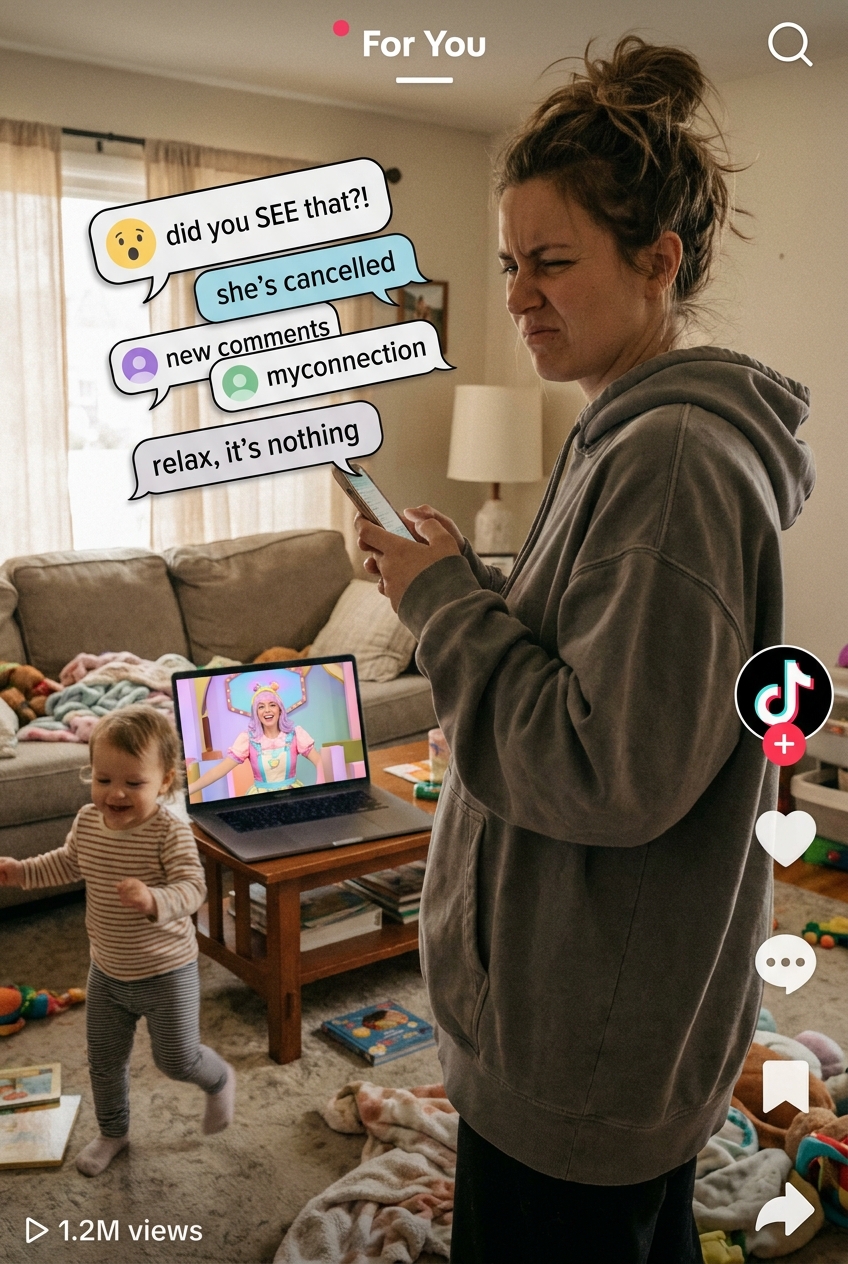
    You open TikTok looking for a safe, familiar Ms Rachel clip so your kid can sing along for ten minutes, and somehow the app turns it into a full-blown investigation of her shirt. That’s the exhausting part. Parents are not asking for frame-by-frame body scrutiny when they just want children’s content. The latest fuss around the Ms Rachel viral TikTok nipple piercing video is a perfect example of how fast a harmless visual detail can get ripped out of context and turned into a weird moral panic. What people are treating like a shocking reveal appears to be nothing more than a brief clothing crease, shadow, or compression artifact in a split-second frame. In other words, the internet saw something for half a second, filled in the blanks, and then acted very sure of itself. If you felt annoyed, grossed out, or just plain tired by the whole thing, you are not overreacting. The discourse really did lose the plot.

    ⚡ In a Hurry? Key Takeaways

    • There is no solid evidence that the viral clip shows a nipple piercing. The most likely explanation is fabric, lighting, motion, or video compression.
    • Before sharing panic posts about kids’ content, pause the clip, watch the full video, and ask whether the claim holds up outside one frozen frame.
    • The real safety lesson is not “panic faster.” It is learning how to spot actual red flags without getting dragged into crowd-made nonsense.

    What actually happened with the clip?

    The short version is simple. A frame from a Ms Rachel video spread across TikTok and other social apps. Some viewers zoomed in on her chest area and claimed they saw a nipple piercing through her top. From there, the usual viral cycle kicked in.

    One person posts a suspicious screenshot. Another adds outrage. A third says, “Why is nobody talking about this?” Then suddenly thousands of people are staring at a low-quality freeze frame like they’re solving a crime.

    That does not make the claim true. It just means the algorithm found a topic people could not stop looking at.

    Why people think they saw something

    Human brains are pattern machines. We are built to spot shapes fast, even when the signal is messy. That helps when you are driving in fog. It does not help much when you are pausing a compressed social video at exactly the wrong millisecond.

    Three boring explanations that fit better than the rumor

    1. Fabric bunching. Shirts fold in odd ways, especially on moving video. A seam, wrinkle, or stretched spot can create a shape that looks more dramatic in a freeze frame than it does in motion.

    2. Lighting and shadow. Bright studio lighting, phone camera exposure, and contrast filters can exaggerate tiny details. What looks like a defined object may just be a highlight and shadow meeting in an unlucky spot.

    3. Compression artifacts. TikTok, reposts, screen recordings, and re-uploads all chew up video quality. Compression can sharpen edges, flatten colors, and invent weird visual blobs that were not noticeable in the original footage.

    So, is there any reason to think the rumor is real?

    Based on the viral clip itself, no. There is no reliable evidence here. No clear confirmation. No consistent visual proof across angles. No context suggesting the video was intentionally inappropriate.

    What there is, unfortunately, is a lot of overconfidence. People often mistake “I saw a screenshot on my feed” for “this has been established as fact.” Those are not the same thing.

    And with children’s content, emotions run hot for understandable reasons. Parents want to protect their kids. That protective instinct is good. But it also makes people easier to bait with misleading claims.

    Why this kind of rumor spreads so fast

    Because it checks every box the internet loves.

    It mixes kids, scandal, and outrage

    That is algorithm catnip. A rumor tied to a well-known children’s creator gets immediate attention because people feel like they need to weigh in right now.

    It rewards people for reacting before thinking

    Social feeds do not hand out trophies for patience. They reward speed, shock, and certainty. The person who says “hang on, let’s check the original clip” almost never gets the most views.

    It turns normal viewers into amateur detectives

    Once a claim starts trending, everyone becomes a forensic analyst with a pause button. That can create a false sense that “lots of people examining it” equals truth. Sometimes it just means lots of people are stuck in the same rumor loop.

    How to tell the difference between a real red flag and viral paranoia

    This is the part that actually helps.

    Look for pattern, not one weird frame

    Real concerns in kids’ content usually show up more than once. They have a pattern. Repeated language. Repeated imagery. Repeated behavior. A single odd still image is weak evidence on its own.

    Check the full clip, not the cropped outrage post

    A lot of these scandals fall apart the second you watch the original video at normal speed. Context matters. Motion matters. Sound matters.

    Ask whether the claim depends on zooming in too far

    If someone has to circle a blurry patch, freeze it, zoom it 400 percent, and tell you what to think, that is your cue to slow down.

    Watch for people skipping straight to motive

    “This was intentional.” “She knew what she was doing.” “They’re hiding it in plain sight.” Those are huge claims. If the evidence is just one unclear frame, the motive talk is doing way too much work.

    What parents should do if a clip makes them uncomfortable

    You do not have to ignore your instincts. You just do not have to let TikTok set your heart rate either.

    Here’s a good rule of thumb:

    • Watch the original clip from the source if possible.
    • View it at normal speed first.
    • Then replay only if something still seems off.
    • Check whether trusted coverage shows the same concern with context.
    • If you still do not like it, skip it. You do not need a jury verdict to choose different content for your home.

    That last point matters. Parents do not need to prove a global conspiracy or debunk one before deciding what to put on screen. You are allowed to be selective without becoming part of the panic machine.

    The bigger issue is how social apps warp normal judgment

    This story is less about Ms Rachel and more about what platforms do to our brains. They flatten everything into a reaction contest. A harmless moment gets sexualized. A low-quality frame becomes “evidence.” Then everyone is pushed to pick a side before they have even figured out what they are looking at.

    That is not healthy media literacy. That is just chaos with autoplay.

    And for parents, it is especially frustrating because the feed does not care why you clicked. You may tap a post because you are worried, annoyed, or trying to fact-check it. The app reads that as interest and sends you ten more versions.

    At a Glance: Comparison

    Feature/Aspect Details Verdict
    Visual evidence A brief, unclear frame interpreted by viewers as showing a piercing Weak evidence. More likely fabric, lighting, or compression.
    Context of the video Children’s educational content with no clear pattern of inappropriate material Does not support the scandal narrative.
    Best response for parents Check the original clip, avoid rage-sharing, and judge based on patterns not panic posts Most practical and least stressful approach.

    Conclusion

    Today’s Ms Rachel nipple-piercing rumor is a textbook example of how a harmless, split-second frame can send the internet straight into moral panic before anybody stops to ask the obvious question. What are we actually looking at? In this case, the answer appears to be a fuzzy visual detail that got wildly overinterpreted. The useful takeaway is not just that this specific claim looks flimsy. It is that parents, teachers, and everyday viewers need a better filter than whatever TikTok serves up next. Slow down. Watch the full clip. Look for patterns. Be careful about turning one blurry frame into a character verdict. That is how you separate real red flags in kids’ content from crowd-driven paranoia, and keep your own viral BS detector a little sharper the next time the feed loses its mind.

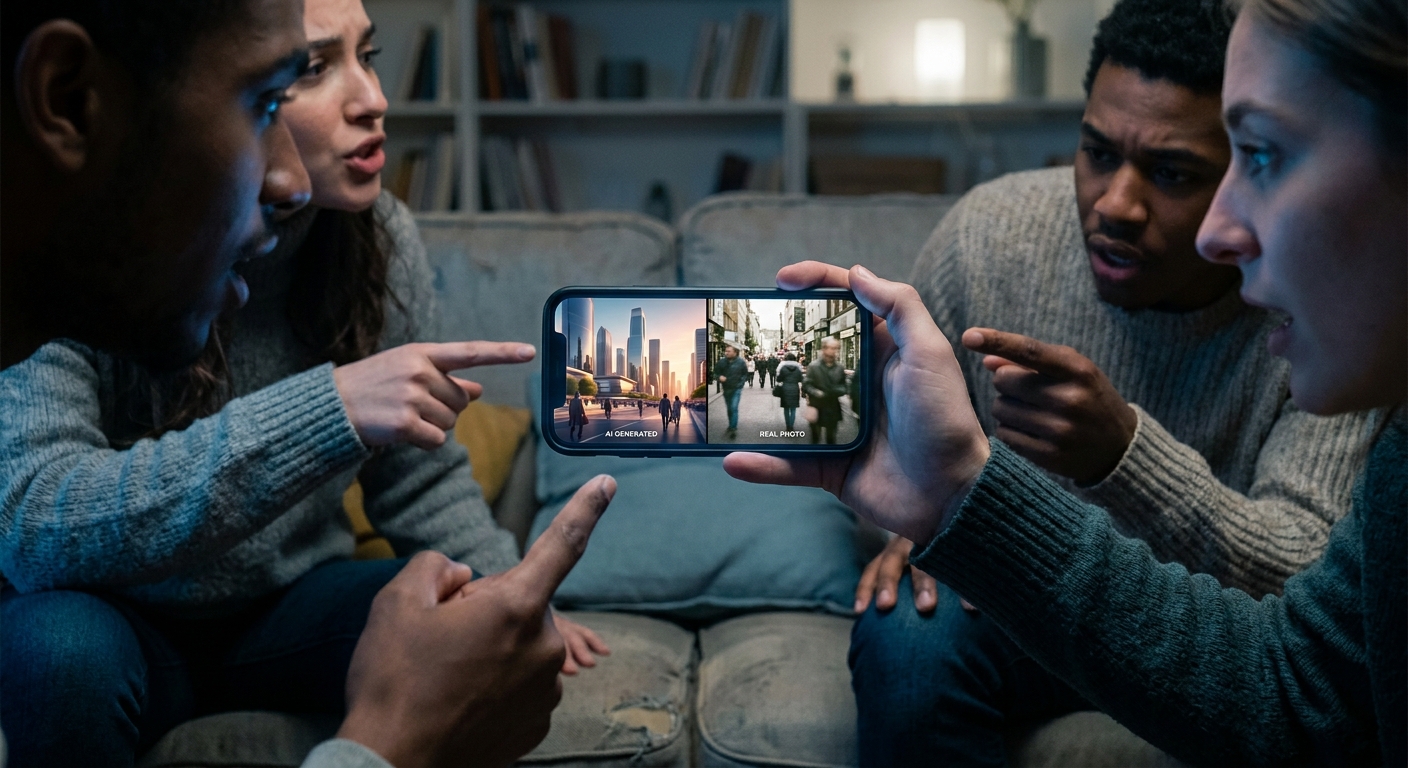
  • This ‘AI Image Or Real Photo?’ TikTok Filter Just Turned The Whole Internet Into A Guessing Game

    This ‘AI Image Or Real Photo?’ TikTok Filter Just Turned The Whole Internet Into A Guessing Game

    You are not crazy if your brain now does a double take every time you see a perfect selfie, a weirdly glossy vacation photo, or a celebrity clip that feels just slightly off. A lot of us scroll with that low-level suspicion now. Is this real, edited, or fully made by AI? That is exactly why the viral AI or real TikTok filter video trend is blowing up. It takes that background anxiety and turns it into a game. TikTok users are being shown images and asked one simple question: is it an AI image or a real photo? The catch is that people keep getting humbled. Badly. What makes this trend worth your time is not just the laughs. It is that it teaches you, very quickly, how easy it is to be fooled by polished skin, strange lighting, too-perfect symmetry, and fake little details that your eyes usually skip right past.

    ⚡ In a Hurry? Key Takeaways

    • The viral AI or real TikTok filter video trend asks users to guess whether an image is AI-made or an actual photo, and many people are getting it wrong.
    • Use the filter as practice. Look for hands, teeth, background text, lighting, reflections, and tiny details that often give AI away.
    • This is not just a meme. It is a useful little media literacy workout that can help you avoid getting fooled by fake content online.

    Why this filter suddenly feels so personal

    The reason this trend hits a nerve is simple. It is not asking about some distant future problem. It is exposing a problem you already have every time you open your phone.

    Your feed is full of content that sits in a blurry middle ground. Some posts are real but heavily edited. Some are AI-assisted. Some are complete fakes. And most of the time, nobody stops to label them clearly.

    So when this filter pops up and starts testing people in public, the reactions are half comedy and half panic. You watch confident users guess wrong three times in a row, then stare at the camera like their trust in the internet just left their body.

    That is why the trend works. It is funny, but it also feels uncomfortably relevant.

    What the viral AI or real TikTok filter video actually does

    The format is pretty straightforward. The filter shows an image, or creators stitch clips and screenshots into the same guessing game format, then asks whether what you are seeing is AI-generated or a genuine photo.

    Sometimes the answer feels obvious. Sometimes it really does not.

    The trick is that modern AI image tools are now very good at making things that feel emotionally and visually believable at first glance. They know how to mimic DSLR depth of field, phone camera blur, makeup styles, food photography, travel shots, and candid portraits.

    That means your old telltale signs are not always enough anymore. We all used to joke about six fingers and melted earrings. Those still happen, but the harder fakes now miss in subtler ways.

    The biggest reason people keep failing

    Most of us do not actually look at images. We scan them.

    We notice the vibe first. Pretty person. Fancy apartment. Cute dog. Stunning sunset. Then we move on. AI thrives in that kind of fast scrolling because it only needs to feel real for two seconds.

    This filter forces you to slow down. Once you do, things start to stand out.

    The clues people are learning to spot

    One of the most useful parts of this trend is that commenters and editors keep comparing notes. Over time, a nice little crowd-sourced checklist has formed.

    1. Hands and fingers

    Yes, this is still a classic for a reason. AI has improved, but hands remain weirdly fragile. Look for extra fingers, fused fingers, unnatural bends, or hands that seem posed in a way no human joints would allow.

    2. Teeth and eyes

    Sometimes AI makes smiles too uniform, too glossy, or strangely dense. Eyes can also have an uncanny symmetry or a glassy look that feels more designed than photographed.

    3. Background text

    Signs, labels, menus, shirt graphics, book spines. AI still struggles with text a lot. If the words look almost correct but not quite, that is a major clue.

    4. Lighting that is a little too perfect

    Real photos usually have some messiness. A blown-out highlight. A soft shadow in the wrong place. AI images often look polished in a suspiciously even way, like every surface got its own beauty light.

    5. Jewelry, glasses, and reflections

    Tiny objects reveal a lot. Earrings may not match. Eyeglass arms can disappear. Reflections in mirrors or windows may not line up with the person or scene.

    6. The “too smooth to be true” effect

    Skin texture, fabric texture, wood grain, fur, and food all matter here. If everything looks airbrushed but the creator is claiming it is a random candid snapshot, your gut may be right.

    Why this trend is bigger than just one filter

    What is really going viral is not the tool itself. It is the shared feeling behind it.

    People are tired of not knowing what they are looking at. They are tired of getting baited by fake celebrity photos, invented travel scenes, and deepfake clips passed around as fact. This trend gives that frustration a shape. It turns confusion into a challenge people can talk about.

    In that sense, it works a lot like other TikTok waves that start as entertainment and then become a running internet conversation. You can see a similar pattern in things like This TikTok ‘Europeans Try American Food’ Clip Just Became The Internet’s New Culture War Comedy Hit, where one simple format suddenly becomes everyone’s argument, joke, and reaction post for a week.

    The difference here is that this one might actually leave you smarter.

    How to use the trend without getting overconfident

    This is the important part. Spotting AI in a game is useful practice, but it does not make anyone a human lie detector.

    Some real photos will look fake. Some AI images will look completely convincing. That is normal now.

    Good habits to keep

    If a photo is being used to sell you something, outrage you, or push a dramatic claim, do more than eyeball it.

    Check the source. Look for the original poster. See whether trusted outlets or reverse image search results back it up. If it is a video, pay attention to lip sync, blinking, lighting shifts, and audio that feels pasted on.

    Think of the filter as a warm-up, not the final exam.

    Do not assume “real-looking” means true

    Even if an image is a real photograph, it can still be misleading. It may be old, cropped, staged, or posted with a false caption.

    That is why media literacy now means more than just asking, “Was this made by AI?” It also means asking, “Who posted this, why did they post it, and what am I supposed to feel or do after seeing it?”

    Why regular people and pro editors both love this trend

    Regular users like it because it is fun to test themselves and roast their own bad guesses.

    Editors, designers, and photographers like it because it opens the door to a bigger conversation. Once people realize they can be fooled, they become much more open to learning how digital images are built, altered, framed, and shared.

    That “aha” moment matters. It is the difference between passive scrolling and active looking.

    And honestly, that is a useful skill now whether you care about tech or not.

    At a Glance: Comparison

    Feature/Aspect Details Verdict
    Entertainment value Fast, funny, and easy to join because the guessing game format works instantly. Very high. That is why it spread so fast.
    Learning potential Teaches people to notice image details like text errors, odd hands, fake reflections, and over-smoothed textures. Surprisingly useful as beginner media literacy practice.
    Real-world reliability Helpful for training your eye, but not enough on its own to verify viral claims or suspicious posts. Good first check, not a final answer.

    Conclusion

    If this trend made you realize you are worse at spotting AI than you thought, welcome to the club. That is not a failure. It is the whole point. The viral AI or real TikTok filter video is more than another disposable meme. It is a quick, funny, low-stakes way to train your eyes in a feed full of fakes, edits, and half-truths. And that helps the community right now. The best reactions and breakdowns give people a fast path to becoming a little less gullible and a lot more alert. In a world where most people just keep scrolling, even a small pause to ask “wait, is this real?” is a very good habit to build.

  • This Delhi Metro Monkey Just Became The Internet’s New Favorite Commuter

    This Delhi Metro Monkey Just Became The Internet’s New Favorite Commuter

    Your feed can feel exhausting lately. One swipe and it is another fight, another public meltdown, another clip designed to make you angry. That is exactly why the Delhi metro monkey viral video has landed so well. It is weird, simple, and oddly calming. A monkey wanders into a Delhi Metro coach, casually hops across seats like it has a monthly pass, and the people around it do something even more surprising. They stay mostly calm. Nobody turns the moment into a spectacle. Nobody escalates it. That mix of curiosity, caution, and patience is what makes the clip so satisfying to watch. It feels real. It feels unpolished. And for about 30 seconds, it gives the internet a break from its usual noise. If you have seen the clip and wondered why everyone is suddenly obsessed with one very relaxed monkey commuter, the answer is easy. It is the rare viral moment that leaves people feeling better, not worse.

    ⚡ In a Hurry? Key Takeaways

    • The Delhi metro monkey viral video is blowing up because it is a funny, low-stakes moment that feels human instead of stressful.
    • If you want more clips like this, save and share videos that show calm, surprising everyday moments before the algorithm buries them.
    • It is wholesome, but it is also a reminder that wild animals in public spaces should be given space and handled carefully.

    What actually happens in the video

    The clip is pretty straightforward, which is part of its charm. A monkey appears inside a Delhi Metro coach and starts moving around with the kind of confidence usually reserved for seasoned commuters. It hops from seat to seat, pauses, looks around, and seems completely at ease.

    The passengers do not panic. They keep their distance, watch carefully, and let the moment unfold. That reaction matters. A lot of viral videos go big because someone loses their temper. This one works because nobody does.

    Why the internet cannot stop watching it

    There are a few reasons this video has stuck.

    It breaks the doom-scroll pattern

    Most viral clips hit because they trigger anger, shock, or secondhand embarrassment. This one does the opposite. It is a clean little interruption. You laugh, maybe replay it once, and move on feeling lighter.

    It feels unscripted

    The best short videos often look like nobody planned them. That is the appeal here. No polished setup. No fake reaction. Just a monkey on the metro and a carriage full of people trying to process it in real time.

    The passengers make the clip better

    The monkey is the star, sure. But the real reason people are sharing the video is the crowd response. Riders seem amused, alert, and surprisingly respectful. That gives the whole thing a gentle energy instead of turning it into chaos.

    Why this tiny moment feels bigger than it is

    A lot of us are not just tired of bad news. We are tired of content that leaves us tense for no good reason. That is why these micro-wholesome clips matter. They are not life-changing. They are not deep in some grand way. They just remind you that the internet can still surface something funny and harmless.

    And yes, the monkey itself is funny. The casual seat-hopping is what sells it. It looks less like an animal causing trouble and more like a passenger trying to find the least crowded spot.

    One important reality check

    It is still a wild animal.

    That means the right response in real life is not to crowd it, touch it, feed it, or try to turn it into content. The riders in the clip seem to understand that instinctively. They give it room. That is the smart move.

    So enjoy the video, but do not copy the moment if you ever find yourself near an animal in a public place. Cute online does not always mean safe offline.

    How to find more “micro-wholesome” videos like this

    If your apps keep serving you rage bait, you can push back a bit.

    Save the good stuff

    When you see a clip like the Delhi metro monkey viral video, save it. Most platforms notice what you watch, replay, like, and send to friends.

    Stop feeding the outrage machine

    Hate-watching still counts as watching. If a video annoys you, scrolling away quickly is often better than diving into the comments for five minutes.

    Share clips that calm people down

    The algorithm follows behavior. If more people pass around strange, sweet, low-drama moments, those clips have a better chance of surviving the flood of louder content.

    Why this clip matters right now

    It is not just about a monkey on public transport. It is about relief. For one short burst, the internet gets to focus on something harmless, funny, and a little absurd. No villain. No pile-on. No humiliation.

    That is rarer than it should be.

    At a Glance: Comparison

    Feature/Aspect Details Verdict
    What happens A monkey casually moves through a Delhi Metro coach while passengers react with calm curiosity. Simple, funny, instantly shareable
    Why it went viral It offers a break from aggressive, stressful viral clips and feels unexpectedly wholesome. A perfect doom-scroll reset
    What viewers should remember It is entertaining, but wild animals should be given space and not treated like props for content. Enjoy online. Be careful offline.

    Conclusion

    The Delhi metro monkey viral video is one of those rare internet moments that actually earns its attention. It is a perfect reset from the doom-scroll loop, a tiny, unpolished slice of real life where nothing explodes, nobody gets humiliated, and strangers handle chaos with surprising grace. That is why people keep watching. And that is why clips like this matter. They give you fast context, a quick laugh, and a reminder that not every viral moment has to leave you anxious. Sometimes the best thing in your feed is just a monkey looking for a seat and a train full of people deciding not to make things worse. If you are tired of viral content that spikes your blood pressure, this is the kind of 30-second exhale worth holding onto and sharing before the algorithm moves on.

  • This 49‑Second ‘You Never Take Me To Bangladesh’ Earworm Is The Internet’s New Inside Joke

    This 49‑Second ‘You Never Take Me To Bangladesh’ Earworm Is The Internet’s New Inside Joke

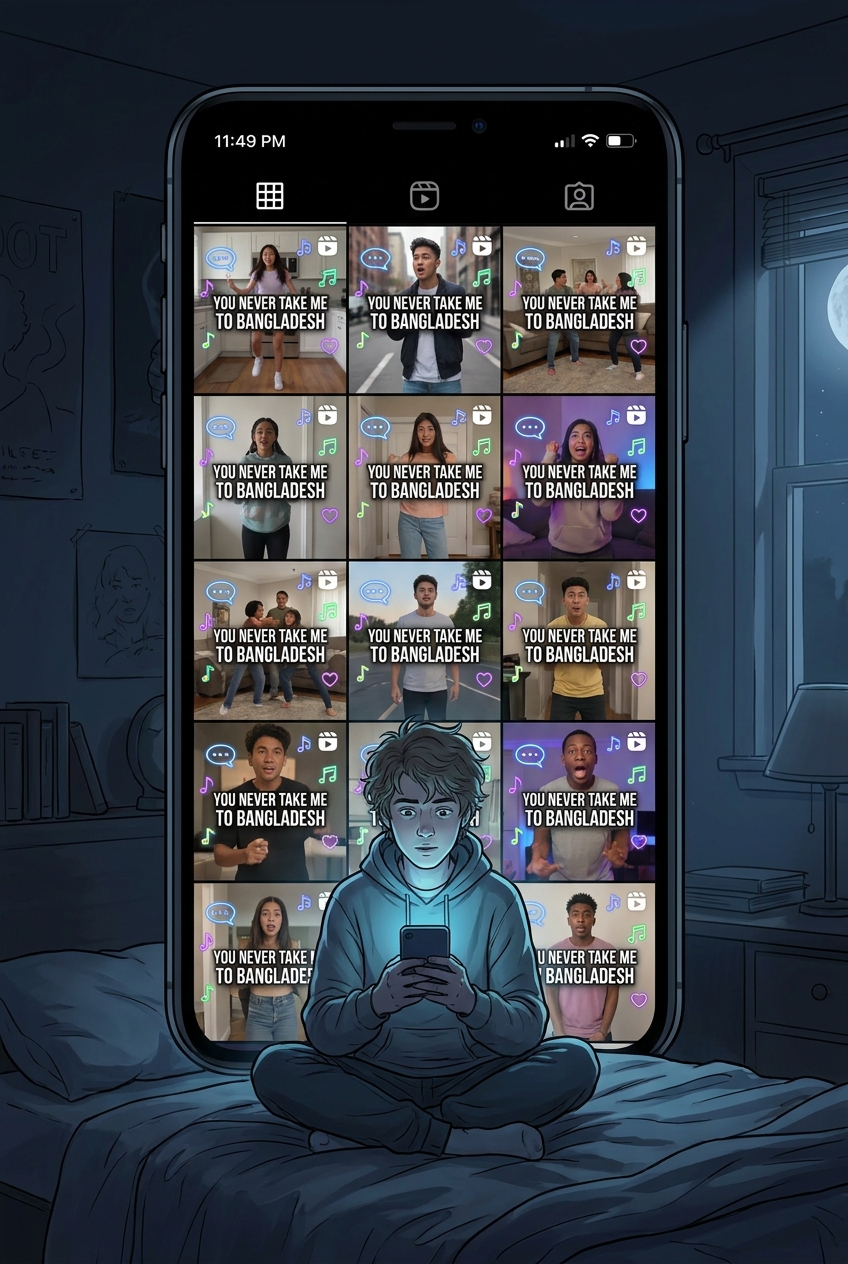
    You are not losing your mind. One minute your feed is normal, and the next everybody is lip-syncing “you never take me to Bangladesh” like it is the most obvious joke in the world. If you felt instantly out of the loop, that is completely fair. Viral sounds now move so fast that a 49-second clip can become a shared internet language before most people even hear it once. The Bangladesh viral 49 second song video is the latest example. A strange, catchy opening line. A short enough runtime to loop forever. And just enough absurdity to make people want to turn it into skits, reaction edits, and stitched punchlines. The good news is you do not need to spend an hour scrolling to catch up. Here is where the clip came from, why that line stuck in everyone’s brain, and how the meme works so you can laugh along instead of wondering what you missed.

    ⚡ In a Hurry? Key Takeaways

    • The “you never take me to Bangladesh” meme comes from a short 49-second song clip that blew up because its opening line is odd, catchy, and easy to remix.
    • If you want to understand the joke fast, watch a few skit versions and edit memes. The humor is usually in how seriously people treat a very silly line.
    • Be careful with reuploads and fake source claims. Viral clips often get reposted without context, so the meme can spread faster than the facts.

    What is the “You Never Take Me to Bangladesh” meme?

    At its core, it is a sound-first meme. People are using a short music clip, usually centered on the line “you never take me to Bangladesh,” as the setup for jokes. The phrase lands because it feels oddly specific, a little dramatic, and instantly quotable.

    That is basically the whole recipe for a viral audio trend now. If a line is catchy enough to repeat and weird enough to surprise people, creators can do the rest. They add reaction faces, fake arguments, travel jokes, romantic skits, and edits that make the line sound way more serious than it really is.

    Why this 49-second clip spread so fast

    It is short enough to loop

    Forty-nine seconds is almost perfect for social apps. People can watch it once, then again, then send it to someone else before they even think about whether it makes sense.

    The first line does the heavy lifting

    The opening lyric is the hook. You hear it once and your brain grabs onto it. That matters more than polished production or deep meaning. A lot of viral audio works this way. The first few seconds need to stop the scroll.

    It works in different kinds of posts

    Some sounds only fit dance videos. This one is more flexible. It can be used for relationship jokes, travel memes, “me vs. my expectations” edits, and even deadpan reaction clips. That flexibility is a huge reason it spread beyond one corner of the internet.

    Where did the Bangladesh viral 49 second song video come from?

    As with many meme sounds, the answer gets messy fast. Viral clips often bounce between TikTok, Instagram Reels, YouTube Shorts, and repost accounts before most people find the original upload. By the time a sound breaks into the mainstream, there may be dozens of versions with different captions, sped-up edits, or slightly altered audio.

    What matters for most readers is this. The clip became famous less because of a traditional song release and more because the internet treated one funny section as its own thing. That happens all the time now. A tiny piece of audio escapes the original context and becomes a standalone joke.

    Why people keep quoting it

    Because it sounds like a line from an argument that nobody else heard. That is the magic. It feels specific, but also open-ended. Viewers immediately start inventing the missing story around it.

    Was it a complaint? A love song? A random travel demand? A melodramatic inside joke? The uncertainty makes it funnier. Everyone fills in the blank in their own way.

    How creators are remixing the meme

    Relationship skits

    This is the most common version. One person acts offended. The other person looks confused. Then the line drops like it is a deeply serious issue.

    Travel edits

    People pair the audio with airport clips, passport jokes, or glamorous destination montages. The joke is that Bangladesh becomes the one missing piece in an over-the-top travel life.

    Reaction memes

    Sometimes the audio is the whole punchline. A creator just plays the sound over a stare, a side-eye, or a dramatic cut. Low effort, high payoff.

    Absurdist edits

    This is where the internet really shines. The line gets dropped over movie scenes, anime clips, football highlights, or fake trailer edits. Suddenly “you never take me to Bangladesh” sounds like the emotional center of a blockbuster.

    Why non-techies keep feeling late to trends like this

    Honestly, because the system is built that way. Social feeds reward speed, repetition, and remixing. A meme does not wait for everyone to catch up. It explodes, peaks, and starts fading while half the audience is still asking where it came from.

    That can feel weirdly isolating. Especially when a joke appears everywhere at once. But you do not need to know the full genealogy of every sound to get the point. Usually, you just need three things. The original hook, the style of joke, and why people found it absurd.

    How to catch up on a viral sound without doom-scrolling

    Here is the easy method.

    1. Find three different versions

    Watch one straight upload of the sound, one skit, and one remix edit. That usually tells you everything you need to know.

    2. Ignore dramatic “explainer” captions at first

    Many reposts pretend there is a huge backstory when the real answer is simply “people thought the line was funny.”

    3. Check the comments

    Comments often explain the meme better than the video itself. People will tell you how they are reading the joke.

    4. Do not overthink the logic

    Some memes are funny because they do not fully make sense. That is not a bug. It is the feature.

    Can you use the sound yourself?

    Yes, if you want to join in, keep it simple. You do not need a polished skit. The best versions are often the most relatable ones. Think small, not grand. Maybe it is a joke about always picking the wrong vacation spot. Maybe it is about a friend who fixates on one oddly specific thing. Maybe it is just your face reacting like this line has ruined your entire evening.

    The trick is to play it straight. The more seriously you treat the ridiculous line, the better the joke usually lands.

    What this says about internet culture right now

    This little clip is a good reminder that online culture is not always built on big events. Sometimes it runs on tiny scraps of audio that hit the right mix of catchy and confusing. Then millions of people collaborate on the joke in real time.

    That is why the Bangladesh viral 49 second song video matters, even if only for a day or two. It shows how fast a random phrase can become shorthand for a shared laugh.

    At a Glance: Comparison

    Feature/Aspect Details Verdict
    Why it went viral A strange opening line, short runtime, and easy remix potential made the clip highly shareable. Classic earworm meme formula.
    Best way to understand it Watch one original-style upload, one skit, and one absurd edit. Fastest way to get the joke without endless scrolling.
    Should you join in? Yes, if you have a simple idea and can play the line completely straight. Low-pressure meme. Easy to remix.

    Conclusion

    If your timeline made you feel late again, do not worry. You only needed a quick decoder ring. Today’s feeds move on in hours, not days, and this 49-second “Bangladesh” track is a perfect example of how fast a throwaway hook can turn into a global in-joke. Once you know where the clip came from, how people are remixing it, and why that opening line stuck, the whole thing clicks. Now you can enjoy the funniest versions, explain it to a less-online friend, or make your own spin before the next sound takes over tomorrow.

  • This Cuban Mom‑Son Timba Dance Just Became The Internet’s New Favorite Joy Scroll

    This Cuban Mom‑Son Timba Dance Just Became The Internet’s New Favorite Joy Scroll

    Your feed can wear you out fast. One minute you are checking in for a quick break, and the next you are neck-deep in rage clips, bad headlines, and people yelling at each other for views. If your thumb has been doom-scrolling on autopilot, this Cuban mom and son timba dance viral video is the kind of internet reset button you need. The clip is simple. A Cuban mom dances timba with her young son, and the two have the kind of rhythm, timing, and pure fun that makes you stop scrolling without even realizing it. No fake setup. No prank. No drama bait. Just joy, music, and a family moment that feels contagious in the best way. It is short, upbeat, and exactly the sort of video that reminds you the internet can still surprise you with something genuinely lovely.

    ⚡ In a Hurry? Key Takeaways

    • This Cuban mom and son timba dance viral video is blowing up because it delivers real joy instead of the usual conflict-heavy social media noise.
    • If your feed feels toxic, start saving and sharing more clips like this so your algorithm serves up more music, family, and fun.
    • It is a rare safe watch for most people, with no ugly twist, which makes it a great mood reset and a better kind of viral trend.

    Why this clip is hitting so hard right now

    Some viral videos spread because they make people angry. Others spread because they make people laugh at somebody. This one works for the opposite reason. It is warm.

    The Cuban mom and her son are dancing timba, a high-energy Cuban music and dance style known for quick footwork, rhythm changes, and a lot of personality. What makes the clip pop is not just the skill. It is the connection between them. You can see trust, timing, and a shared sense of fun.

    That matters more than people think. After hours of junk content, a clean, happy video can feel almost weirdly powerful. It cuts through the noise because it asks nothing from you except, “Hey, want to smile for 30 seconds?”

    What makes the Cuban mom and son timba dance viral video different

    It feels real

    A lot of social media joy is overproduced. You can practically hear the brainstorming session behind it. This clip does not have that problem. It feels lived-in. Natural. Like you stumbled onto a real family moment instead of a content factory.

    It shows skill without showing off

    Yes, the dancing is impressive. But it does not come off as “look at us, praise us now.” The energy is playful, not performative. That is a big reason people keep watching and rewatching.

    It is easy to share

    People do not need context to get it. There is no long setup. No internet lore to memorize. You hit play, and within seconds you understand the appeal. That is viral fuel right there.

    Why joyful videos matter more than they seem

    This might sound small, but your feed shapes your mood more than most people admit. If every break in your day is filled with outrage, stress, and arguments, your brain starts treating that as normal background noise.

    That is why a clip like this matters. It is not “just a dance video.” It is a tiny interruption in the doom loop. A reminder that not everything online has to be cynical, cruel, or exhausting.

    And for creators, there is a lesson here too. You do not have to chase the latest fake feud to get attention. People are hungry for content that feels human.

    How to use this to clean up your feed

    If this video gave you that little shot of relief, do not just move on and let the algorithm drag you back into the swamp.

    Save it

    Most platforms treat saves as a strong signal. If you want more upbeat content, saving clips like this helps.

    Share it with one person

    Send it to the friend who keeps texting you, “I need something nice on the internet today.” This is that.

    Engage with the good stuff

    Like, comment, follow similar accounts. Social apps are very simple creatures. If you keep feeding them joy, music, dance, and family content, they are more likely to send more of it back.

    What timba adds to the magic

    Even if you do not know much about Cuban music, timba has a built-in spark. It is lively, layered, and made for movement. That energy comes through even on a tiny phone screen.

    In this clip, the style helps tell the story. The quick steps, the playful back-and-forth, the confidence of the mom, and the son keeping up with his own flair all add up to something bigger than a cute moment. It becomes a performance you can feel, even if you have never danced a day in your life.

    Why people are calling it a “joy scroll” favorite

    Because it passes the test most viral videos fail. You do not regret watching it.

    That sounds obvious, but it is rare. So much trending content leaves you annoyed, tense, or feeling like you need a shower. This one does the opposite. It leaves you lighter.

    That is why the Cuban mom and son timba dance viral video is spreading. Not because it is shocking, but because it is refreshing. It gives people a break from all the digital static.

    At a Glance: Comparison

    Feature/Aspect Details Verdict
    Mood impact Quick, upbeat, and genuinely uplifting instead of stressful or combative. A real brain reset.
    Shareability Easy to understand with no extra context needed. Works across age groups. Ideal feel-good send.
    Staying power Built on talent, family chemistry, and music rather than cheap shock value. More memorable than most trends.

    Conclusion

    Sometimes the best thing on the internet is also the simplest. This viral timba routine from a Cuban mom and her young son is a rare clean hit of joy in a feed that usually runs on conflict. It resets your brain in under a minute, reminds you how fun the internet can still be, and points creators toward something better than the usual drama treadmill. If your day needed one good scroll, this is probably it.

  • This TikTok ‘Europeans Try American Food’ Clip Just Became The Internet’s New Culture War Comedy Hit

    This TikTok ‘Europeans Try American Food’ Clip Just Became The Internet’s New Culture War Comedy Hit

    You are not imagining it. One minute your feed is normal, the next every other post is somebody doing the same joke about American food being “chemicals in a bag,” and somehow Walmart freezer aisles have become a global punchline. If you came late to this one, it is annoying. The original clip gets buried fast under stitches, reaction duets, reposts, and people arguing in the comments about bread, cheese, and portion sizes like it is a diplomatic crisis.

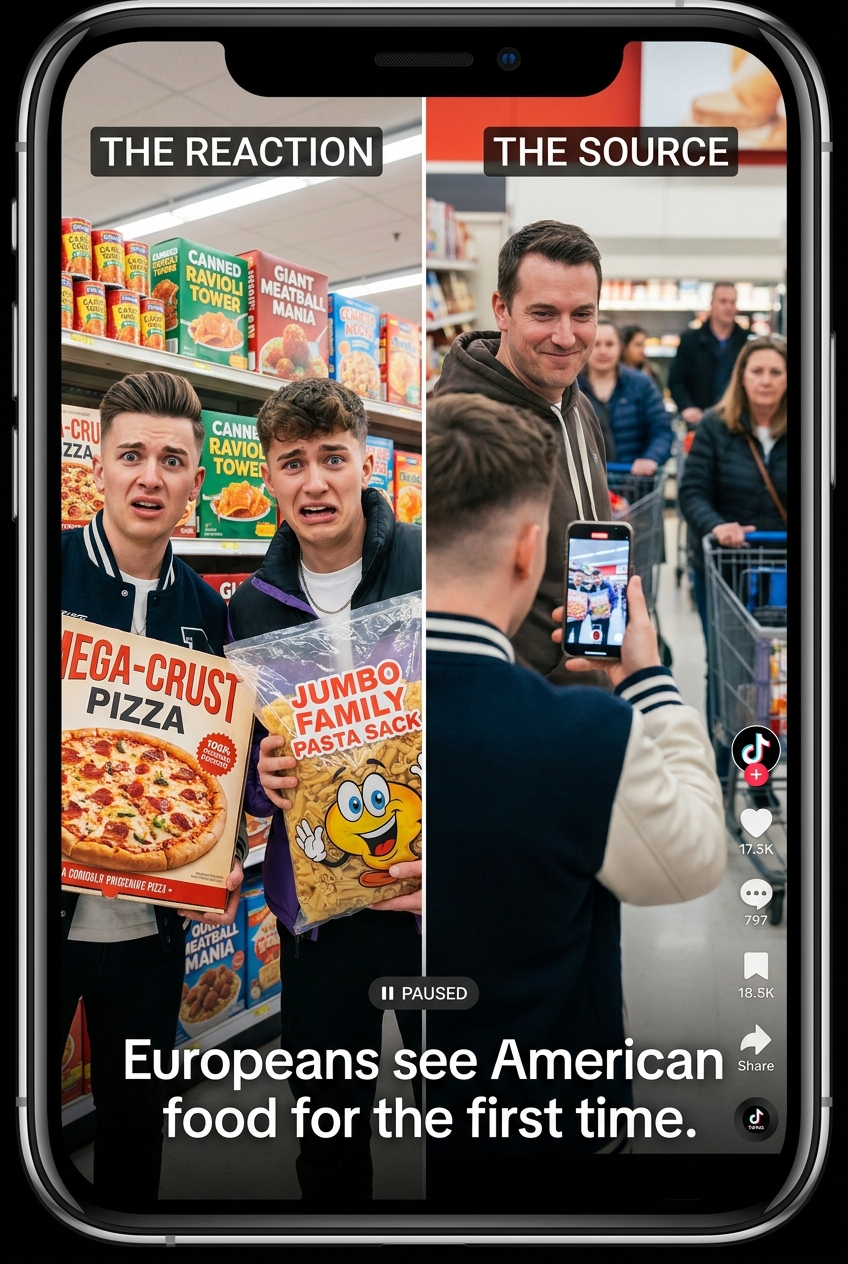
    Here is the short version. The latest Europeans mocking American food TikTok viral video that really took off in the last day follows a simple formula. A European creator walks through a US grocery store, spots frozen pizza, canned ravioli, giant pasta bags, bright orange cheese, or shelf-stable snacks, then reacts with a mix of horror, disbelief, and very practiced comic timing. People are sharing it because it is funny, familiar, and perfectly designed to start arguments. The trick is knowing what part is actual culture shock, what part is performance, and what part is just great feed-bait.

    ⚡ In a Hurry? Key Takeaways

    • The viral clip is popular because it mixes real grocery differences with exaggerated reactions made to be stitched and argued over.
    • If you want the source fast, search the exact phrase “Europeans mocking American food TikTok viral video” on TikTok, then filter by most liked or posted in the last 24 hours before opening reposts.
    • Most of the discourse is not really about food safety. It is about identity, class, convenience, and internet performance, so do not take every joke as a serious food review.

    What actually happened

    The clip making the rounds is not complicated, which is part of why it spread so fast. A European creator, or sometimes a pair of them, walks through an American grocery store and reacts to products that look extra processed, extra large, or just unusually packaged compared with what they are used to at home.

    The greatest hits are always the same because they work. Frozen pizza with a thick ingredient list. Canned ravioli. Plastic tubs of cheese snacks. Giant family-size pasta or cereal bags. Brightly colored desserts. Pre-made meals that look cheap, fast, and very engineered.

    Then comes the payoff. A line delivered like a roast. Something like “you people eat this on purpose?” or “this looks like food designed by a committee.” It is half observation, half stand-up bit.

    That is why people keep quoting it. It gives both sides exactly what they want. Americans can laugh, get defensive, or both. Europeans can act shocked. Everyone else gets easy comment bait.

    Why this one broke through

    It hits three internet buttons at once

    First, it is visual. You do not need context to understand a dramatic zoom on canned pasta.

    Second, it is tribal. People love low-stakes cultural competition, especially when it is about food. It feels personal but safe enough to joke about.

    Third, it is remixable. Every line can be stitched. Every aisle can become a response video. That is why the original often disappears under copies so quickly.

    The timing helped

    Over the last 24 hours, a lot of engagement came from people who were not even responding to the food itself. They were responding to the comments. Once a trend shifts from “look at this funny clip” to “look at these people fighting over this funny clip,” the algorithm usually gets very interested.

    What is genuinely funny, and what is just cheap outrage

    The funny part is the contrast. American grocery stores can feel huge, loud, and wildly abundant compared with many European supermarkets. Even Americans joke about this all the time. There is real comedy in seeing someone discover a 48-count frozen snack box like they have found an alien artifact.

    The fair criticism is also easy to see. A lot of mainstream US grocery food is heavily processed, aggressively marketed, and packaged in portions that can look absurd from the outside. That is not a secret. Americans say this too.

    The lazy part is pretending one freezer aisle explains an entire country’s diet. It does not. Every nation has cheap convenience food, regional staples, high-quality fresh food, and products locals quietly know are terrible but buy anyway.

    That is the part worth remembering before you jump into the comments like it is a policy debate.

    How to find the original clip without losing your mind

    Use search like a person, not like the algorithm wants you to

    If you are trying to track down the Europeans mocking American food TikTok viral video, start with the exact phrase people are using in captions and comments. Search for “Europeans mocking American food TikTok viral video” and then look for the posts with the oldest timestamps and highest likes, not just the ones TikTok pushes first.

    Also try adding the food item everyone keeps quoting. “Frozen pizza,” “canned ravioli,” or “Walmart pasta aisle” can narrow things down fast.

    Watch for repost tells

    If the video has giant subtitles slapped on top, a random podcast watermark, or cropped edges, it is probably not the original. Same if the account mostly posts viral clips from other people.

    The original usually has cleaner framing, fewer extra graphics, and comments asking where the creator is from rather than explaining the joke for the tenth time.

    Why people are fighting about it so hard

    This trend looks like it is about snacks. It is really about status. People read all kinds of things into food. Money. Taste. Health. National pride. Even morality, which is a little ridiculous when the subject is canned pasta.

    For some viewers, the joke lands as harmless teasing. For others, it feels like a cheap shot at working-class convenience food, especially when the target is a budget store aisle rather than some fancy food hall. That is where the tone shifts from comedy to culture war.

    And yes, some creators know exactly what they are doing. They are not documenting a sincere first impression. They are building a reaction machine.

    How to talk about it without sounding insufferable

    If you want to share the clip

    Share the funny line, not the fake grand conclusion. “This reaction to a family-size frozen pizza is killing me” works better than “Europe just exposed America.” One is a joke. The other is how you end up in a 300-comment argument with strangers.

    If you want to be fair

    Say both things at once. American grocery stores really do have some bizarre ultra-processed products. They also have fresh food, specialty food, local food, and normal food that never goes viral because nobody stitches a bag of spinach.

    If you want to avoid feeding the worst version of the trend

    Skip accounts that crop out the original creator, add rage captions, or post “EUROPEANS DESTROY AMERICAN FOOD” style edits. Those are designed to keep you annoyed, not informed.

    So, is the criticism fair?

    Partly. The best version of this trend works because it points at something real. The US does sell a lot of convenience food in giant quantities, often with ingredients and packaging that can look shocking if you are not used to them.

    But the trend also cheats a little. It picks the most photogenic examples of processed food and presents them like they are the whole menu of a nation of 300 million people. That is like walking into a petrol station abroad, filming the candy shelf, and declaring you now understand the local cuisine.

    Funny? Yes. Complete? Not even close.

    At a Glance: Comparison

    Feature/Aspect Details Verdict
    What makes the clip viral Big visual reactions, familiar grocery items, and easy quote lines that invite stitches and arguments. Very effective internet comedy.
    How fair the criticism is It is fair when it points out real processing, portion size, or packaging differences. Less fair when it treats one discount aisle like a full national food map. Half truth, half performance.
    Best way to engage Enjoy the jokes, find the original before sharing, and avoid turning a freezer roast into a full culture war speech. Laugh first. Comment carefully.

    Conclusion

    If this trend made you feel like everyone else got the joke before you did, now you are caught up. The Europeans mocking American food TikTok viral video blew up because it is a perfect little internet machine. It has real observations, exaggerated reactions, and just enough national pride on both sides to keep people posting all day. The useful move is not to ask whether one aisle proves anything deep about America or Europe. It is to spot the mix. Some of it is genuinely funny. Some of it is fair criticism. Some of it is pure feed-bait built to make you argue about frozen pizza like civilization depends on it. Once you see that, you can share the clip, laugh at the good lines, and skip the worst parts of the discourse without feeling lost.

  • This Viral China Travel Reel Shows The Side Almost No One Puts On Instagram

    This Viral China Travel Reel Shows The Side Almost No One Puts On Instagram

    You are not crazy for feeling whiplash. One reel shows China as a spotless sci-fi postcard with perfect trains, glowing towers and trendy drinks. The next one, the viral China travel reel garbage streets video making the rounds this week, shows trash piles, plastic waste and dingy back lanes, then basically says, “See, this is the real place.” That is frustrating because both clips can be true in a very limited sense, and both can still be misleading. Social media is great at turning one block, one angle or one bad day into a grand statement about 1.4 billion people. If you are trying to figure out what to believe before a trip, or just want to avoid being manipulated by rage bait, the trick is not picking Team Glossy or Team Gritty. It is learning how these videos frame reality, what they leave out, and what a fairer view actually looks like.

    ⚡ In a Hurry? Key Takeaways

    • That viral reel is not automatically fake, but it is almost certainly incomplete.
    • Check for cropping, location tags, time of day, repeat cuts and loaded captions before you treat any travel reel as “proof.”
    • One dirty alley or one polished shopping district should never be used to judge an entire country, city or culture.

    Why this reel hit such a nerve

    The reason people keep sharing this clip is simple. It feels like a correction. After years of ultra-curated travel content, a dirty street looks “honest” by comparison.

    That is exactly why this style of video spreads so fast. We tend to trust footage that looks rough, handheld and unpolished. It feels less like marketing. Sometimes that instinct helps. Sometimes it makes us easier to fool.

    A grimy alley can be real and still be used dishonestly. So can a gleaming skyline. The problem is not whether the camera captured something true. The problem is whether the creator is pretending that one tiny slice explains the whole place.

    Can both versions of China be real?

    Yes. Easily.

    China is huge. So are its differences from one neighborhood to the next. You can walk from a high-end retail district into an older service alley in minutes. You can also find spotless transit hubs near streets dealing with trash pickup, construction runoff or overcrowding.

    That should not be shocking. It is true in New York, London, Paris, Mumbai, Tokyo and pretty much every major city on Earth. Big places contain polished zones, neglected zones, tourist zones and ordinary working areas all at once.

    So the key question is not “Is this video real?” It is “What is this video trying to make me conclude?”

    What the viral clip may be doing to your brain

    1. It swaps context for certainty

    A 30 second reel is too short to explain where the footage was shot, whether it was near a market after closing, whether garbage collection was delayed, or whether the creator purposely hunted for the worst-looking backstreets.

    But the caption often jumps straight to a giant claim. “This is the real China.” That is the trap.

    2. It uses contrast to trigger emotion

    If you have seen dozens of glossy videos before this one, a dirty-street clip feels like a reveal. It gives you that little rush of “Aha, now I am seeing the truth.” Creators know this.

    3. It encourages country-level judgment from street-level footage

    This is where travel content turns into culture war content. A reel stops being about a location and starts nudging viewers toward a bigger political or cultural conclusion.

    That leap is usually much bigger than the evidence on screen.

    How to fact-check a viral travel reel without turning it into a full-time job

    You do not need to become a detective. You just need a few habits.

    Check the edges of the frame

    Look for what is missing. Is the creator only filming the ground, bins and puddles? Are they avoiding wider shots that show what kind of area this is? A tight frame can make one messy corner look like an entire district.

    Pause on signs, storefronts and license plates

    If there are street signs, shop names or transit clues, use them. They can tell you whether the clip is from a tourist zone, a residential back lane, a service road or even a completely different city than the caption suggests.

    Watch for repeated visual tricks

    Some reels reuse the same pile of trash from multiple angles. That pads out the clip and makes the mess feel larger than it is. If the footage keeps cutting quickly, ask yourself whether you are seeing many locations or the same one over and over.

    Read the caption like an ad

    If the text says things like “no one shows you this,” “they lied to you,” or “this is the truth,” slow down. Those are classic bait phrases. They are designed to make you share before you think.

    Search for the same area from other people

    This is the easiest reality check. Search the location name on TikTok, YouTube, Instagram or maps reviews. If ten other videos show a normal mixed area and one creator only found the worst patch, you have your answer.

    What travel creators often leave out

    Trash on a street can mean many different things. Maybe pickup happens later in the evening. Maybe a market just closed. Maybe it rained. Maybe the alley is behind restaurants rather than where visitors actually walk. Maybe the area genuinely has a sanitation problem.

    Those are very different stories.

    The reel usually does not tell you which one applies, because uncertainty gets fewer clicks than outrage.

    Glossy reels are not innocent either

    It is worth saying the quiet part out loud. The polished version can be just as misleading as the negative one.

    Creators crop out construction. They avoid older blocks. They film at the cleanest hour of the day. They stick to malls, flagship boulevards and scenic transit stations. Then viewers come away thinking every inch of a city looks like a tourism board ad.

    So if you feel fooled by both extremes, that is actually a healthy reaction. It means your radar is working.

    A better way to judge a place before you travel

    Use mixed sources, not one viral clip

    Try a simple three-part check. Watch one tourist reel, one long-form walking video and one everyday vlog from a local or expat. The combination is usually more useful than any single “hot take.”

    Prefer longer videos when possible

    A 20 minute walk through a neighborhood tells you more than fifteen jump cuts with dramatic music. Longer clips make it harder to hide context.

    Use maps and street-level reviews

    Hotel reviews, neighborhood guides and map photos are boring compared with reels. They are also often more useful. Boring is underrated when you are spending real money on a trip.

    Separate cleanliness from safety

    A place can look messy and still be reasonably safe. A place can look polished and still have scams, theft or tourist traps. Do not let aesthetics do all the thinking for you.

    What this specific “real China” framing gets wrong

    The biggest issue with the viral China travel reel garbage streets video is not that dirty streets exist. Of course they do. The issue is the word “real.”

    No single reel gets to claim that title. Not the luxury mall montage. Not the back-alley trash clip. “Real” is almost always a sign that the creator is selling you a total conclusion from partial evidence.

    A fairer statement would be this: “Here is one side of one area that glossy travel clips often leave out.” That is less dramatic. It is also far more honest.

    How to watch viral travel videos without getting played

    Try this quick checklist before you hit share:

    • What exactly is shown?
    • What is outside the frame?
    • Is the caption making a bigger claim than the footage supports?
    • Can I find the same location from another source?
    • Am I reacting to evidence, or to the creator’s tone?

    If you can answer those in under a minute, you are already watching smarter than most people scrolling past.

    At a Glance: Comparison

    Feature/Aspect Details Verdict
    What the reel shows Real footage of trash, plastic waste and worn alleys, likely from a specific location and moment in time Potentially accurate, but very narrow
    What the caption implies That this single clip reveals the “real” China hidden by polished influencers Too broad to trust without more context
    Best viewer response Compare sources, check location clues and avoid turning one street into a national verdict Most reliable approach

    Conclusion

    It is completely fair to be skeptical of glossy travel videos. It is also fair to be skeptical of “finally, the truth” clips that swing just as hard in the other direction. People are increasingly planning trips, forming political opinions and judging whole cultures from tiny, emotional snippets. That is a lot of weight to put on a single reel. The smartest move is not to stop watching viral travel content. It is to watch it with better tools. Once you learn to spot cropping tricks, bait captions and missing context, you can still enjoy the videos without letting them do your thinking for you. And that helps everyone, because a more grounded view of a place is better for travelers, better for public conversation and a lot better than getting played by whichever edit happened to hit your feed first.

  • Meet Daisy the Porch Cow: The Laid‑Back Front‑Yard Superstar Taking Over Your Feed

    Meet Daisy the Porch Cow: The Laid‑Back Front‑Yard Superstar Taking Over Your Feed

    You know the feeling. You open your phone for a quick break, and somehow every viral clip wants to drag you into outrage, secondhand stress, or a fake setup that takes forever to get to the point. That is why the Daisy the Porch Cow viral video is hitting such a sweet spot. It is simple, funny, and oddly calming. Daisy is exactly what she sounds like. A cow, on a porch, hanging out like she pays the mortgage. That tiny bit of unexpected charm is enough to make people stop scrolling and smile for once. No shouting. No prank reveal. No dramatic backstory needed. Just a laid-back front-yard cow becoming the kind of internet star people actually want in their feeds. If your group chat has felt a little too heavy lately, Daisy might be the easiest mood reset you can send today.

    ⚡ In a Hurry? Key Takeaways

    • The Daisy the Porch Cow viral video is taking off because it is low-stress, funny, and instantly comforting.
    • If you want a quick mood boost, share short, wholesome animal clips like this instead of doomscrolling through tense trending posts.
    • The real value here is not just laughs. It is a small mental break that makes chats, family threads, and work Slacks feel lighter.

    Why Daisy Is Suddenly Everywhere

    The Daisy the Porch Cow viral video works because it gets to the point fast. You see a cow parked on a porch like it is the most normal thing in the world, and your brain does a quick double take. That little surprise is enough.

    It also feels real. That matters. People are worn out by clips that scream for attention with fake tension and overedited chaos. Daisy does the opposite. She just exists. Calmly. Confidently. Like the neighborhood unofficial mayor.

    That kind of authenticity travels fast online. One person shares it because it is funny. Another shares it because it is weirdly peaceful. Before long, the whole town, and then half the internet, is in on the joke.

    What Makes the Video So Shareable

    It is easy to understand in two seconds

    You do not need context, subtitles, or a long explanation. There is a cow on a porch. That is the bit. It lands immediately.

    It feels like a tiny mental vacation

    A lot of viral content asks you to pick a side, get angry, or brace for impact. Daisy asks nothing from you. She is just there, being charming. That is a big reason people keep forwarding the clip around.

    It has personality without trying too hard

    The best animal videos are not just cute. They feel like they reveal a whole little character. Daisy comes off as relaxed, unbothered, and somehow deeply at home on that porch. People love assigning personality to animals, and in this case it fits perfectly.

    Why Low-Stakes Animal Content Keeps Winning

    There is a reason wholesome animal clips regularly break through the noise. They are one of the few things online that still feel broadly safe to share. You can send a porch cow video to your cousin, your coworker, your neighbor, or the family group chat without starting a debate.

    That is more useful than it sounds. A lot of people are not just looking for entertainment. They are looking for something pleasant they can pass along without effort or risk. Daisy fits that job perfectly.

    It is also a reminder that not every viral hit has to be bigger, louder, or messier than the last one. Sometimes the internet still rewards a simple moment that feels human, even when the star happens to have hooves.

    How to Actually Use This as a Better Scroll Habit

    If your feed has started to feel like homework, Daisy offers a nice little lesson. Start building in more low-stress content on purpose.

    Send the clip instead of another complaint

    When a chat goes quiet or tense, one harmless funny video can reset the mood fast. This is especially true in work Slacks and family threads, where people often want connection but not a full conversation.

    Notice what leaves you feeling better

    Not all “fun” content is relaxing. Some of it is exhausting in disguise. If a clip makes you smile quickly and move on feeling lighter, that is worth more than three minutes of clickbait buildup.

    Give yourself permission to like small things

    Not every meaningful online moment has to teach a lesson or break news. Sometimes a porch cow is enough. Honestly, that might be the whole appeal.

    So, What Happened With Daisy?

    At heart, the story is simple. Daisy, a very chill front-yard cow, was caught in a delightfully ordinary but visually absurd moment. People saw it, related to the vibe, and started sharing it because it felt like a break from the usual online noise.

    That is the real story behind the Daisy the Porch Cow viral video. It is not about scandal or spectacle. It is about timing, mood, and the internet’s ongoing love for animals with accidental star power.

    At a Glance: Comparison

    Feature/Aspect Details Verdict
    Watchability Quick payoff, no long setup, easy to enjoy in seconds Excellent for short mood breaks
    Shareability Wholesome, funny, and safe to send across almost any chat High. This is prime group-chat material
    Stress Level Zero-stakes animal content with no argument attached A welcome reset from tense viral feeds

    Conclusion

    The best thing about the Daisy the Porch Cow viral video is how little it asks from you. It does not want your outrage, your attention span, or your emotional energy. It just gives you a small, strange, very pleasant moment. And right now, that is valuable. The internet is packed with tense, polarized clips, so a zero-stakes, front-porch cow casually charming an entire town is exactly the kind of reset people are craving. Share it with someone who needs a breather. Odds are, their day gets a little better for it.

  • This Elementary School’s Michael Jackson Tribute Just Became The Feel‑Good Viral Video Of The Week

    This Elementary School’s Michael Jackson Tribute Just Became The Feel‑Good Viral Video Of The Week

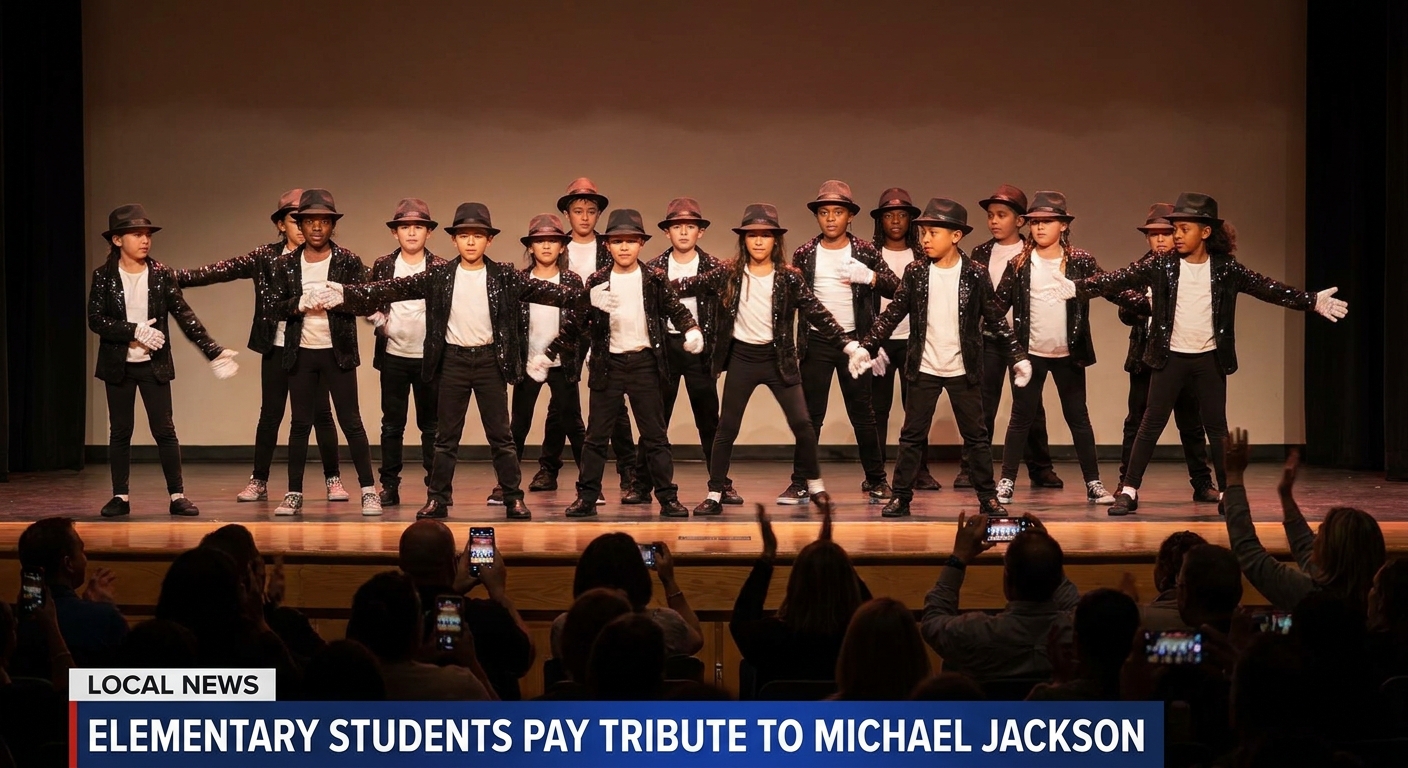
    Your feed has probably felt like a lot lately. Too much outrage, too many tired reposts, and way too many “viral” videos that feel manufactured five seconds after you hit play. So when something actually joyful shows up, something with real people and real effort behind it, it stands out fast. That is exactly what is happening with this elementary school Michael Jackson tribute viral video. A Los Angeles elementary school performance for Black Music Month has blown up across Instagram and TikTok, and for once, the hype makes sense. The clip shows Baldwin Hills students delivering a full Michael Jackson tribute with timing, energy, and confidence that would put plenty of grown-ups to shame. It is fun, a little jaw-dropping, and the kind of video you send to friends because it actually improves their day. No gimmick. No fake setup. Just talented kids, a school stage, and a teacher who clearly put in serious work.

    ⚡ In a Hurry? Key Takeaways

    • This elementary school Michael Jackson tribute viral video is worth your time because it feels genuinely joyful, polished, and human.
    • If your social feed feels draining, seek out clips like this from schools and community events instead of doom-scrolling recycled outrage.
    • The real value here is not just entertainment. It is a reminder that positive viral moments still exist without brands, tricks, or AI junk.

    Why this clip is blowing up

    Plenty of videos get labeled “viral” every week, but most of them vanish just as quickly because there is not much there. This one is different. The performance has the one thing people can still spot instantly online. Heart.

    The students are not just loosely dancing to a famous song. They are locked in. The choreography is sharp, the energy is huge, and the whole thing feels rehearsed in the best possible way. You can tell someone cared about every beat.

    That matters. People are tired of content that looks optimized instead of lived. A school fundraiser performance with kids giving it everything they have feels fresh precisely because it is real.

    What happened at the school

    The performance came out of a Los Angeles elementary school event tied to Black Music Month. Students from Baldwin Hills took the stage for a Michael Jackson tribute, and the result hit that sweet spot of talent, nostalgia, and pure fun.

    From the clips spreading across TikTok and Instagram, the kids absolutely committed. The moves were clean. The formation changes were crisp. The confidence was through the roof. And yes, the internet noticed fast.

    A lot of the praise is also going to the teacher or staff member behind the routine, which feels deserved. School performances do not magically become this tight on their own. Somebody spent time picking music, teaching steps, keeping everyone motivated, and getting the group performance-ready.

    Why people are connecting with it

    It cuts through the noise

    Most social platforms are crowded with anger, arguments, and content sludge. This clip is the opposite. It is energetic without being fake and impressive without begging for attention.

    It gives people something easy to share

    Not every viral post needs to spark debate. Sometimes people just want to drop a link in the group chat and say, “You need to watch this.” This is that kind of clip.

    It reminds people what viral used to feel like

    Before every trend became a marketing plan, the internet was better at surfacing weird, funny, or wonderful moments from ordinary life. This feels like one of those.

    What makes the performance so fun to watch

    First, there is the Michael Jackson factor. His music and dance style still have instant recognition across generations. Even if you only know a handful of the biggest hits, you know the vibe when you see it.

    Second, the kids are not holding back. That full-commitment energy is contagious. Watching young performers throw themselves into choreography with total confidence is hard not to love.

    Third, it has a built-in underdog charm. A school stage is not a huge production set. There are no cinematic tricks doing the heavy lifting. It is just performance, timing, and enthusiasm.

    Why this matters beyond one good video

    It is easy to dismiss viral moments as disposable, but the better ones do something useful. They give people a quick shared experience that is actually positive. That may sound small, but online, small is not nothing.

    This clip also shines a light on the kind of work schools and teachers do that rarely gets broad attention. Arts programs, performances, and cultural events can take a ton of effort, and when they hit, they create memories that stick with kids for years.

    It is also a nice reminder that not every standout moment on the internet needs expensive gear or a polished campaign. Sometimes the best thing you will see all week is a bunch of students absolutely nailing a routine in front of a crowd.

    Should you go watch it?

    Yes. If your brain is cooked from bad news and low-effort scrolling, this is a solid reset. It is short, uplifting, and impressive enough that you will probably watch it more than once.

    And if you are the person in your friend group who always sends the good stuff, this is prime material. It is wholesome without being corny. That is a hard balance to hit.

    At a Glance: Comparison

    Feature/Aspect Details Verdict
    Entertainment value High-energy choreography, familiar music, and kids fully committed to the performance Absolutely worth watching
    Authenticity A real school fundraiser moment, not a staged brand campaign or trend-chasing post Feels refreshingly genuine
    Shareability Short, joyful, and easy for all ages to appreciate Perfect group chat material

    Conclusion

    This elementary school Michael Jackson tribute viral video is the rare internet hit that earns the attention. A Los Angeles elementary school’s Black Music Month fundraiser performance has exploded across Instagram and TikTok after a group of Baldwin Hills students nailed a full Michael Jackson tribute, complete with choreography sharp enough to make adults look lazy. In a week where timelines are packed with outrage and AI slop, spotlighting this clip gives the community a shared, positive moment to rally around, plus a reminder that some of the most electric things on the internet are still just kids, a school stage and a teacher who went way above and beyond.