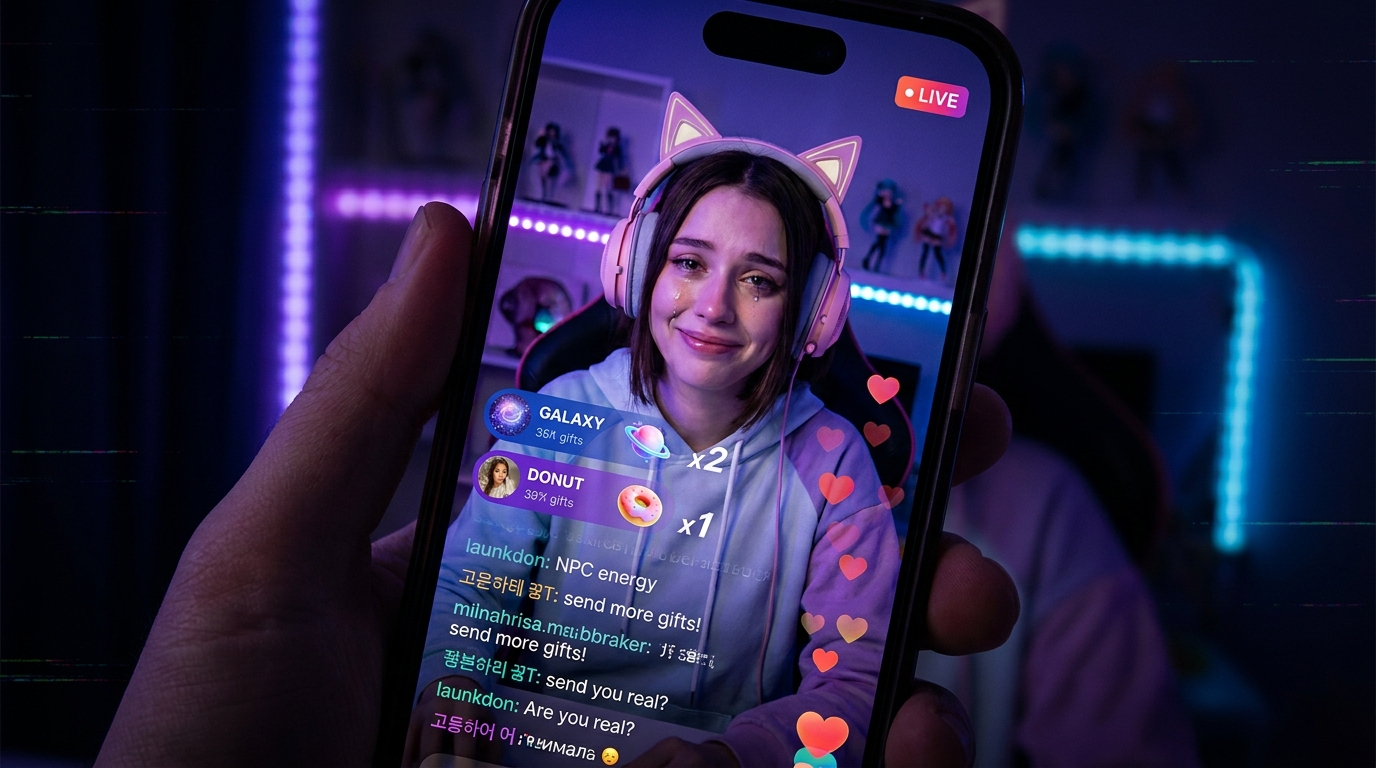
You were trying to switch your brain off for two minutes, and TikTok handed you an existential crisis instead. One minute it is a creator doing that now-famous NPC live routine, repeating the same phrases for gifts with perfect, eerie timing. The next, a clip spreads where her face seems to drop out of character for a second, and suddenly everybody online is arguing about the same thing. Was it a real breakdown, a smart bit, burnout on camera, or the most honest moment the app has produced in months? That is why the viral npc tiktok livestream meltdown is everywhere. It is not just because the clip is weird. It is because it pokes at a bigger fear a lot of people already have. If online creators start acting like game characters because the algorithm pays better that way, who is performing for whom? And when someone slips, is that the human finally showing up, or just better content?
⚡ In a Hurry? Key Takeaways
- The clip blew up because it feels like a rare break in a highly repetitive, money-driven performance format.
- If your feed is overloaded, search for the original context before sharing hot takes. Short clips often remove what happened right before and after.
- The bigger issue is not just one streamer. It is how platforms reward creators for acting less human in order to hold attention and earn gifts.
What actually happened in the viral clip?
The basic setup is simple. A creator is on TikTok Live doing NPC roleplay. Viewers send virtual gifts. Each gift triggers a canned reaction, catchphrase, facial expression, or looped movement. Think of it like live improv crossed with a slot machine.
Then came the clip people cannot stop reposting. In it, the creator appears to falter. Maybe the smile drops. Maybe the eyes look tired. Maybe the timing slips for a beat. That tiny crack is what made the video travel far beyond people who normally watch TikTok Lives.
Most viral versions are short, clipped, and stripped of context. That matters. A pause can mean exhaustion, irritation, technical lag, or simply a performer switching gears. But once the internet senses a “mask off” moment, it runs with it.
Why this one spread so fast
It feels like proof of something people already suspect
A lot of people already feel the modern internet is getting weirdly robotic. Not just with actual AI, but with humans flattening themselves into repeatable content machines. This clip seemed to confirm that fear in one glance.
It turns a niche format into a mainstream debate
NPC livestreams were already popular, but mostly understood by people deep in TikTok culture. The meltdown clip gave everyone else a way in. You did not need to know the rules. You just had to watch someone look like they briefly could not do it anymore.
It is perfect argument bait
These are the most shareable videos on the internet. One side sees art or hustle. Another sees exploitation. Another sees a joke that got too real. Everyone can project their own fear onto it, which is exactly how something becomes impossible to escape on your For You Page.
Is it performance, exploitation, or the future of entertainment?
Annoying answer, but honest one. It can be all three at once.
Yes, it is performance
NPC streaming is not random. It is a learned format with rhythm, audience cues, and monetization tricks. Good performers know how to keep repetition hypnotic without losing control of the room. That takes effort, timing, and stamina.
Yes, it can slide into exploitation
The platform rewards repetition because repetition keeps viewers watching and gifting. The creator may be choosing to do it, but that does not mean the system is neutral. If acting less human pays better than acting human, the pressure is obvious.
And yes, it probably is part of the future
Not because everyone wants to become an NPC, but because internet entertainment keeps moving toward formats that are easy to repeat, easy to clip, and easy to monetize in tiny bursts. Livestreaming already blurs gaming, theatre, sales, improv, and customer service. NPC content pushes that mix to an extreme.
Why the “snap” matters so much
People are reacting to the break in character because it feels more real than most polished content online. That is the heart of this story. We are drowning in over-produced clips, brand-safe smiles, and creators who have learned exactly how to sound natural on command.
So when someone appears to crack for half a second, it lands hard. It feels like the human pushing back against the format. Whether that moment was fully genuine or not, viewers read it as truth. That tells you a lot about how hungry people are for something unscripted.
Why your feed is now full of copycats
Because platforms copy success at light speed. The moment one format proves it can hold attention and generate gifts, clones appear. Some are sincere. Some are mocking the trend. Some are trying to cash in before the audience gets bored.
This is also why the viral npc tiktok livestream meltdown became bigger than the original stream. The internet no longer just watches a moment. It remixes it, debates it, monetizes it, and turns it into a thousand mini-industries by lunchtime.
What this says about AI, even when no AI is involved
This is the part people are really circling around. The creator in the clip is human. But the format looks machine-like. Repetition. trigger-response behavior. fixed phrases. endless loops. It resembles AI because so much online content is now shaped to mimic machine efficiency.
That is the uneasy feeling behind the jokes. We keep asking whether the bots are getting more human. Meanwhile, humans are learning to act more like bots because the apps reward it.
How to watch clips like this without getting fooled
Check whether you are seeing the full stream or a cropped moment
Ten seconds can create a whole false narrative. Always look for longer versions or at least a few different uploads.
Separate the format from the person
You can dislike the NPC trend without treating the creator like a symbol for everything wrong with the internet. Sometimes a person is just doing a job that the platform happens to reward.
Ask who benefits from your outrage
Usually, the app does. Rage, concern, confusion, and mockery all count as engagement. If a clip makes you feel weird enough to watch five more versions, the system has already won.
So, are we the robots now?
Not exactly. But we are living in a system that nudges real people toward robotic behavior because it is profitable, trackable, and easy to repeat. That is what makes this clip stick in your head. It is less about one streamer and more about the shape of online life.
The creator repeats a line. The audience sends a trigger. The app boosts what works. Then everybody copies it. That loop is not artificial intelligence. It is platform logic wearing a human face.
At a Glance: Comparison
| Feature/Aspect | Details | Verdict |
|---|---|---|
| Why it went viral | A tiny break in a repetitive livestream format felt shockingly human and easy to debate. | Bigger than the clip itself |
| What the clip means | It can be read as performance art, creator burnout, algorithm pressure, or all three at once. | Context matters |
| What it says about the internet | Platforms reward repeatable, machine-like behavior, even when real humans are doing the work. | Worth paying attention to |
Conclusion
The reason this clip hit so hard is simple. It gave people a name and a face for a feeling they already had. The live internet is getting stranger, more repetitive, and more optimized, and one brief wobble in an NPC stream suddenly made that impossible to ignore. That is useful. It gives people a shared reference point for talking about AI, burnout, authenticity, and platform pressure without needing to spend all day sorting through recycled takes. If nothing else, the viral npc tiktok livestream meltdown is a reminder to look past the joke and ask a better question. Not “why would someone do this?” but “what kind of internet keeps rewarding it?”