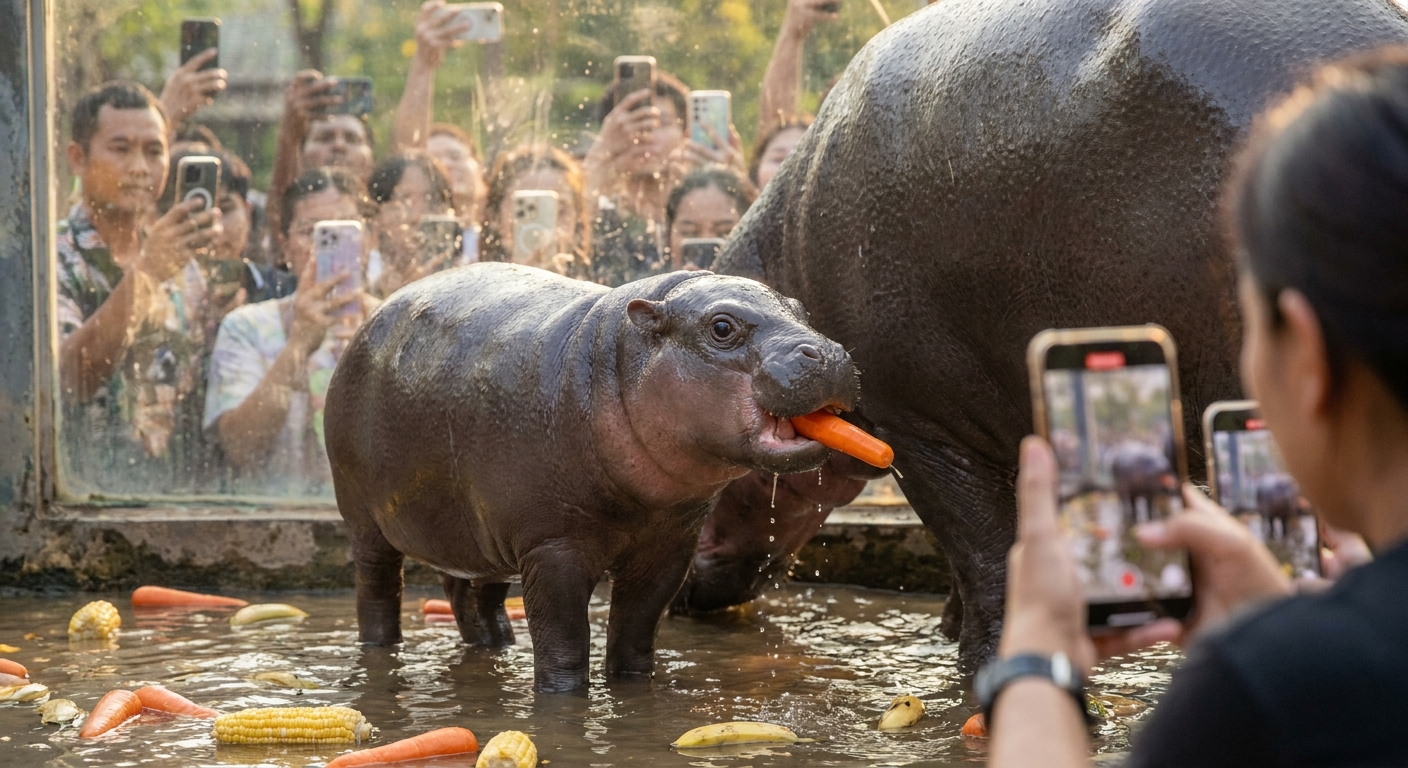
You know the feeling. You swipe past clip after clip that promises to be “the internet’s favorite thing,” and most of it lands with a shrug. Then one tiny animal shows up, crunches a carrot, wobbles into frame like she has never met gravity before, and suddenly the whole feed feels less annoying. That is basically what happened with the Moo Deng pygmy hippo viral video. Moo Deng, a two-month-old pygmy hippo at a zoo in Chon Buri, Thailand, has blown up across TikTok and Instagram because she is absurdly cute in a way that feels almost unfair. In the clips, she toddles around, cuddles up to her mom, and occasionally face-plants into food like a sleepy toddler at a birthday party. It is wholesome, yes. But it also matters more than you might think, because Moo Deng’s fame is putting a spotlight on a species with only about 2,000 to 2,500 left in the wild.
⚡ In a Hurry? Key Takeaways
- The Moo Deng pygmy hippo viral video is worth your time because it is genuinely charming and tied to a bigger conservation story.
- If you enjoy the clips, take one extra step and read about pygmy hippos or support credible wildlife conservation work.
- Viral animal fame can help endangered species, but real-world crowds and hype also need careful handling so the animals stay protected.
Why this baby hippo clip is hitting so hard
Some viral videos spread because people are arguing. Some spread because they are bizarre. Moo Deng’s clips are different. They work because they trigger that instant, very human reaction of wanting to keep something small and precious safe.
That “I need to protect her at all costs” feeling is not random. Moo Deng looks like a cartoon sketch that somehow came to life. She is tiny, round, curious, a little clumsy, and fully unaware that millions of strangers are now emotionally invested in her snack schedule.
And to be honest, that kind of harmless joy is rare online. People are tired. Timelines are noisy. So when a baby pygmy hippo appears and does almost nothing except exist adorably, it cuts through the usual junk fast.
What happened with Moo Deng
Moo Deng lives at a zoo in Chon Buri, Thailand. Her handlers started posting short vertical videos of her daily life. Not a polished documentary. Not a big marketing push. Just simple clips of a baby hippo being a baby hippo.
That was enough.
Millions of views followed on TikTok and Instagram. Then the online attention spilled into real life. People reportedly started driving hours just to see her in person. That is when a cute animal story becomes something bigger than a meme.
Why these clips spread so fast
The format is part of the magic. Short, phone-friendly videos make animals feel close. You are not watching some distant nature special with dramatic voice-over music. You are getting little slices of personality.
Moo Deng crunching carrots. Moo Deng snuggling her mom. Moo Deng wobbling around like her legs are still being introduced to each other. It feels immediate and real, which is exactly what social platforms reward.
Why the Moo Deng pygmy hippo viral video actually matters
This is the part where the story gets more important than “aw, cute baby animal.” Pygmy hippos are endangered. Estimates often put the wild population at around 2,000 to 2,500 animals left.
That means Moo Deng is not just internet-famous. She is now a very effective ambassador for a species most people probably never thought about this week, or ever.
That is the weird power of viral animal content. It can do two things at once. First, it gives people a quick dose of joy. Second, it can push a little awareness into the mainstream without making it feel like homework.
Wholesome content can change behavior
When an animal goes viral, people start searching. They learn where the species lives, why it is at risk, and what threatens it. That can lead to more donations, more media coverage, and more pressure on zoos and wildlife groups to explain how they are caring for animals.
Not every viral moment leads to lasting change, of course. The internet moves on fast. But attention still has value. If even a small part of Moo Deng’s audience walks away knowing pygmy hippos are endangered, that is more than most posts ever accomplish.
The awkward part nobody should ignore
There is always a catch with viral animal fame. Huge attention can bring huge crowds. Crowds bring stress, noise, and pressure on staff. And when people get attached to an animal, they sometimes forget the animal is not there to perform on demand.
That is why the best version of this story is not just “look at the cute baby hippo.” It is “look at the cute baby hippo, and also think about what responsible care looks like when the internet shows up.”
What responsible fandom looks like
If you are sharing the Moo Deng pygmy hippo viral video, great. Enjoy it. Laugh at the carrot crunching. Send it to someone who needs a better day.
But it also helps to keep a few common-sense things in mind.
- Do not encourage bad zoo behavior just to get a photo or video.
- Do not treat a wild species like a plush toy with legs.
- Do support conservation groups or educational sources if the clips made you care.
- Do remember that the goal is a healthy animal, not endless content.
Why people are calling her the internet’s new obsession
Because she checks every box. She is rare. She is baby-sized. She is unintentionally funny. She feels gentle and vulnerable. And she showed up at the exact moment people were hungry for something soft and uncomplicated.
That last part matters. A lot of viral content asks you to react with outrage, suspicion, or exhaustion. Moo Deng asks almost nothing from you except maybe 20 seconds of your attention and a brief smile.
That is a better deal than most of the internet offers.
Should you watch it?
Yes. This is one of those rare cases where the hype more or less matches the clip.
If you have been burned out by forced virality, the Moo Deng pygmy hippo viral video is a nice reset. It is cute in a real way, not a manufactured way. More importantly, it opens the door to a bigger conversation about endangered animals and what happens when online fame lands on a living creature.
At a Glance: Comparison
| Feature/Aspect | Details | Verdict |
|---|---|---|
| Cuteness factor | Tiny size, wobbly movement, carrot crunching, cuddles with mom | Absolutely lives up to the hype |
| Why it went viral | Short vertical clips feel personal, funny, and easy to share | A perfect social media storm, in a good way |
| Bigger meaning | Draws attention to an endangered species with only about 2,000 to 2,500 left in the wild | More than a meme if people stay curious after the scroll |
Conclusion
Moo Deng is not just another passing animal clip clogging your feed. She is a two-month-old pygmy hippo in Chon Buri, Thailand whose tiny, carrot-munching, wobbling little videos have pulled in millions of views and inspired real crowds to show up and see her for themselves. That alone would make for a sweet internet story. But the bigger value is what comes next. Her sudden fame has turned an endangered species, one with only about 2,000 to 2,500 left in the wild, into something people are actually stopping to notice. So yes, enjoy the serotonin hit. Send the clip to a friend. Smile at the snack pile face-plant. Just do not let the thought end there. The best outcome from the Moo Deng pygmy hippo viral video is not only that people adored her for a week. It is that some of them cared enough to keep thinking after the meme cycle moved on.