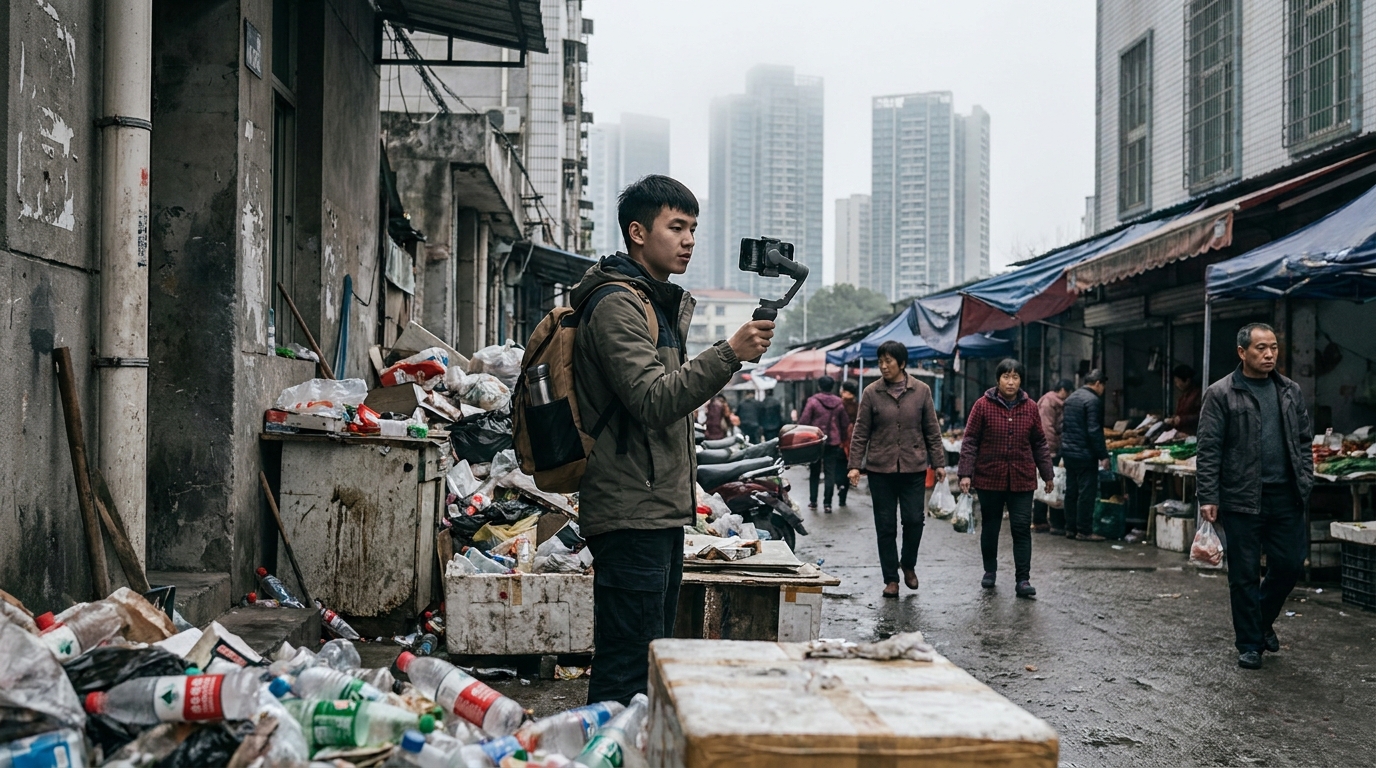
You are not crazy for feeling whiplash. One reel shows China as a spotless sci-fi postcard with perfect trains, glowing towers and trendy drinks. The next one, the viral China travel reel garbage streets video making the rounds this week, shows trash piles, plastic waste and dingy back lanes, then basically says, “See, this is the real place.” That is frustrating because both clips can be true in a very limited sense, and both can still be misleading. Social media is great at turning one block, one angle or one bad day into a grand statement about 1.4 billion people. If you are trying to figure out what to believe before a trip, or just want to avoid being manipulated by rage bait, the trick is not picking Team Glossy or Team Gritty. It is learning how these videos frame reality, what they leave out, and what a fairer view actually looks like.
⚡ In a Hurry? Key Takeaways
- That viral reel is not automatically fake, but it is almost certainly incomplete.
- Check for cropping, location tags, time of day, repeat cuts and loaded captions before you treat any travel reel as “proof.”
- One dirty alley or one polished shopping district should never be used to judge an entire country, city or culture.
Why this reel hit such a nerve
The reason people keep sharing this clip is simple. It feels like a correction. After years of ultra-curated travel content, a dirty street looks “honest” by comparison.
That is exactly why this style of video spreads so fast. We tend to trust footage that looks rough, handheld and unpolished. It feels less like marketing. Sometimes that instinct helps. Sometimes it makes us easier to fool.
A grimy alley can be real and still be used dishonestly. So can a gleaming skyline. The problem is not whether the camera captured something true. The problem is whether the creator is pretending that one tiny slice explains the whole place.
Can both versions of China be real?
Yes. Easily.
China is huge. So are its differences from one neighborhood to the next. You can walk from a high-end retail district into an older service alley in minutes. You can also find spotless transit hubs near streets dealing with trash pickup, construction runoff or overcrowding.
That should not be shocking. It is true in New York, London, Paris, Mumbai, Tokyo and pretty much every major city on Earth. Big places contain polished zones, neglected zones, tourist zones and ordinary working areas all at once.
So the key question is not “Is this video real?” It is “What is this video trying to make me conclude?”
What the viral clip may be doing to your brain
1. It swaps context for certainty
A 30 second reel is too short to explain where the footage was shot, whether it was near a market after closing, whether garbage collection was delayed, or whether the creator purposely hunted for the worst-looking backstreets.
But the caption often jumps straight to a giant claim. “This is the real China.” That is the trap.
2. It uses contrast to trigger emotion
If you have seen dozens of glossy videos before this one, a dirty-street clip feels like a reveal. It gives you that little rush of “Aha, now I am seeing the truth.” Creators know this.
3. It encourages country-level judgment from street-level footage
This is where travel content turns into culture war content. A reel stops being about a location and starts nudging viewers toward a bigger political or cultural conclusion.
That leap is usually much bigger than the evidence on screen.
How to fact-check a viral travel reel without turning it into a full-time job
You do not need to become a detective. You just need a few habits.
Check the edges of the frame
Look for what is missing. Is the creator only filming the ground, bins and puddles? Are they avoiding wider shots that show what kind of area this is? A tight frame can make one messy corner look like an entire district.
Pause on signs, storefronts and license plates
If there are street signs, shop names or transit clues, use them. They can tell you whether the clip is from a tourist zone, a residential back lane, a service road or even a completely different city than the caption suggests.
Watch for repeated visual tricks
Some reels reuse the same pile of trash from multiple angles. That pads out the clip and makes the mess feel larger than it is. If the footage keeps cutting quickly, ask yourself whether you are seeing many locations or the same one over and over.
Read the caption like an ad
If the text says things like “no one shows you this,” “they lied to you,” or “this is the truth,” slow down. Those are classic bait phrases. They are designed to make you share before you think.
Search for the same area from other people
This is the easiest reality check. Search the location name on TikTok, YouTube, Instagram or maps reviews. If ten other videos show a normal mixed area and one creator only found the worst patch, you have your answer.
What travel creators often leave out
Trash on a street can mean many different things. Maybe pickup happens later in the evening. Maybe a market just closed. Maybe it rained. Maybe the alley is behind restaurants rather than where visitors actually walk. Maybe the area genuinely has a sanitation problem.
Those are very different stories.
The reel usually does not tell you which one applies, because uncertainty gets fewer clicks than outrage.
Glossy reels are not innocent either
It is worth saying the quiet part out loud. The polished version can be just as misleading as the negative one.
Creators crop out construction. They avoid older blocks. They film at the cleanest hour of the day. They stick to malls, flagship boulevards and scenic transit stations. Then viewers come away thinking every inch of a city looks like a tourism board ad.
So if you feel fooled by both extremes, that is actually a healthy reaction. It means your radar is working.
A better way to judge a place before you travel
Use mixed sources, not one viral clip
Try a simple three-part check. Watch one tourist reel, one long-form walking video and one everyday vlog from a local or expat. The combination is usually more useful than any single “hot take.”
Prefer longer videos when possible
A 20 minute walk through a neighborhood tells you more than fifteen jump cuts with dramatic music. Longer clips make it harder to hide context.
Use maps and street-level reviews
Hotel reviews, neighborhood guides and map photos are boring compared with reels. They are also often more useful. Boring is underrated when you are spending real money on a trip.
Separate cleanliness from safety
A place can look messy and still be reasonably safe. A place can look polished and still have scams, theft or tourist traps. Do not let aesthetics do all the thinking for you.
What this specific “real China” framing gets wrong
The biggest issue with the viral China travel reel garbage streets video is not that dirty streets exist. Of course they do. The issue is the word “real.”
No single reel gets to claim that title. Not the luxury mall montage. Not the back-alley trash clip. “Real” is almost always a sign that the creator is selling you a total conclusion from partial evidence.
A fairer statement would be this: “Here is one side of one area that glossy travel clips often leave out.” That is less dramatic. It is also far more honest.
How to watch viral travel videos without getting played
Try this quick checklist before you hit share:
- What exactly is shown?
- What is outside the frame?
- Is the caption making a bigger claim than the footage supports?
- Can I find the same location from another source?
- Am I reacting to evidence, or to the creator’s tone?
If you can answer those in under a minute, you are already watching smarter than most people scrolling past.
At a Glance: Comparison
| Feature/Aspect | Details | Verdict |
|---|---|---|
| What the reel shows | Real footage of trash, plastic waste and worn alleys, likely from a specific location and moment in time | Potentially accurate, but very narrow |
| What the caption implies | That this single clip reveals the “real” China hidden by polished influencers | Too broad to trust without more context |
| Best viewer response | Compare sources, check location clues and avoid turning one street into a national verdict | Most reliable approach |
Conclusion
It is completely fair to be skeptical of glossy travel videos. It is also fair to be skeptical of “finally, the truth” clips that swing just as hard in the other direction. People are increasingly planning trips, forming political opinions and judging whole cultures from tiny, emotional snippets. That is a lot of weight to put on a single reel. The smartest move is not to stop watching viral travel content. It is to watch it with better tools. Once you learn to spot cropping tricks, bait captions and missing context, you can still enjoy the videos without letting them do your thinking for you. And that helps everyone, because a more grounded view of a place is better for travelers, better for public conversation and a lot better than getting played by whichever edit happened to hit your feed first.