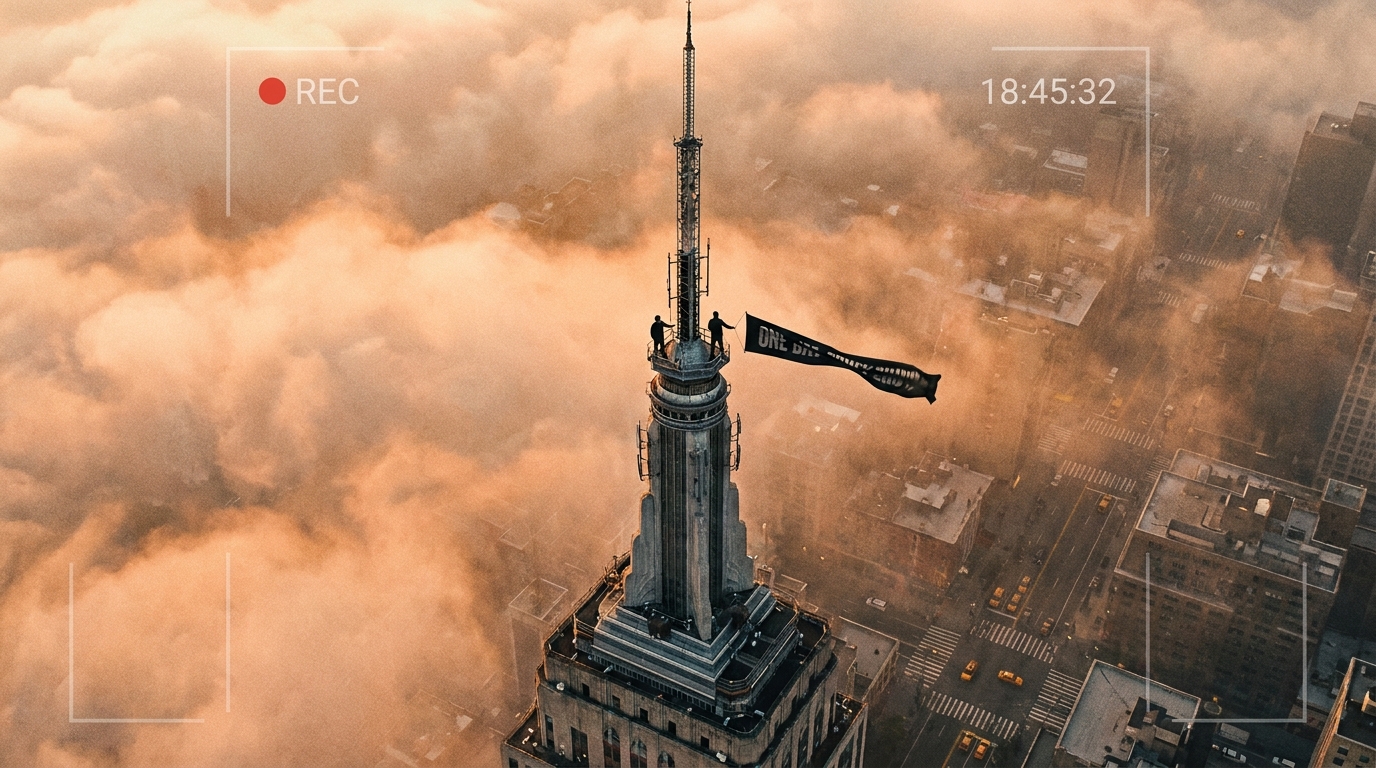
Your feed is not broken. It really is the same Empire State Building proposal viral video skywalkers clip over and over again. If you felt like everyone else somehow got the backstory except you, that frustration is fair. Most reposts skip the important bit. This was not a staged movie promo or a harmless rooftop photo op. The viral clip shows rooftoppers Angela Nikolau and Ivan “Vanya” Beerkus high above New York on the Empire State Building antenna, where they unfurled a peace banner, got engaged, and were then arrested. That alone would be enough to send the internet into debate mode. But what pushed it into full feed-domination territory was everything that happened next. News footage became romance edits. Romance edits became AI remixes. AI remixes became a trend people could copy from their sofa without ever going near a ladder. So if you want the clean version, without the online yelling, here it is.
⚡ In a Hurry? Key Takeaways
- The clip is real. It shows rooftoppers Angela Nikolau and Ivan Beerkus on the Empire State Building antenna, where a proposal happened before arrests followed.
- If you want to join the trend, make an edit, reaction, or AI remix from existing footage. Do not try to recreate the stunt in real life.
- The big debate is not whether it looks dramatic. It does. The argument is whether people are celebrating romance, reckless trespassing, or both at once.
What actually happened in the clip?
The short version is simple. A helicopter news camera caught Angela Nikolau and Ivan “Vanya” Beerkus on the Empire State Building antenna, roughly 1,454 feet above the city. While up there, they unfurled a peace banner. Then came the proposal moment that now keeps showing up on TikTok, Instagram Reels, and meme pages.
That is the part most people see. Then the clip ends. What many reposts leave out is that the pair were later arrested. That missing ending is why the video feels so strange out of context. One second it looks like a huge romantic gesture. The next second it is also a story about trespassing, danger, and consequences.
Who are Angela Nikolau and Ivan Beerkus?
They are not random tourists who wandered somewhere they should not have been. They are well-known rooftoppers, people who climb tall buildings and structures to capture photos and videos from extreme heights. If you have seen dramatic skyline selfies from impossible-looking places, you have probably seen their work before without knowing their names.
That matters because it changes how you read the clip. For some viewers, this was a genuine relationship moment between two people whose whole lives already revolve around high-risk climbing. For others, it looks like brand-building dressed up as romance. Both readings are why the internet cannot stop arguing.
Why this one exploded harder than the average proposal video
It looks unreal, even though it is real
Most proposal videos blur together. Park bench. Beach sunset. Hidden photographer. Happy crying. This one has the visual language of a dream sequence or a glitchy simulation. Two tiny people. Massive skyline. Thin antenna. Helicopter footage. It does not look like normal human behavior, which is exactly why people cannot scroll past it.
It arrived with built-in controversy
If this had been done on a sanctioned observation deck, it would have been a sweet news story for a day. But because it involved an illegal, risky climb and arrests, every repost came preloaded with an argument. Was it beautiful? Yes. Was it reckless? Also yes. Social platforms love nothing more than a clip that lets everyone feel morally correct in the comments.
It snapped perfectly into an existing story world
Editors quickly tied the footage to Netflix’s “Skywalkers: A Love Story,” which gave the clip an instant cinematic frame. Suddenly people were not just sharing a proposal. They were sharing a whole myth. Dangerous love. Height addiction. Urban legend energy. That makes a thirty-second video feel much bigger than thirty seconds.
How the clip spread from news footage to full-blown trend
This is the part a lot of people miss. Viral videos do not stay in one form anymore. They mutate.
Phase 1: Raw news clip
The helicopter footage gave the internet something precious. A neutral-looking source. It felt less like influencer content and more like “wait, did the news just catch this happening?” That gave it credibility and shock value at the same time.
Phase 2: Romantic reposts
Then came the caption accounts. “When he knows your love language.” “Love at the highest level.” “If he wanted to, he would.” You know the genre. These posts stripped away the legal and safety context and left just enough for the fantasy.
Phase 3: Debate clips and duets
Next came reaction videos. Some called it iconic. Others called it peak clout addiction. This is where the clip really took off, because people were no longer just watching it. They were choosing a side and telling everyone else why their side was correct.
Phase 4: AI remixes and the “Empire State flag” trend
Once AI editing tools got involved, the footage became raw material. Users started making alternate banners, fake skyline variations, stylized weather effects, cinematic slow-motion passes, and surreal “what if this happened in another city” versions. The “Empire State flag” trend took off because it let regular users participate safely. They could remix the banner, swap the message, or turn the clip into satire without leaving home.
That is a big part of why it feels so intensely 2026. A single event no longer stays a single event. It becomes a template.
Why brands suddenly seemed to post about it at the same time
If it felt like half your feed was synchronized, you were not imagining it. Once a clip hits a certain level of mainstream attention, brand social teams move fast. They are not always reacting organically. They often have alert tools, trend dashboards, and internal chats dedicated to moments exactly like this.
The reason this stunt was so tempting for brands is obvious. It had romance, New York imagery, danger, and a strong visual hook. That makes it easy to adapt into jokes, “relationship goals” posts, or banner-based memes. The problem is that each brand version smooths off more of the rough edges. By the time the tenth snack company posts its cute spin, the actual arrests and safety risks have nearly vanished from the story.
The ethical mess, without the sermon
It is okay to have mixed feelings here. Most people do.
You can think the video is visually stunning and still think nobody should copy it. You can believe the couple’s connection is real and still think social media has a bad habit of turning dangerous acts into mood boards. You can also notice how quickly platforms reward high-risk content while pretending they only care about safety.
That tension is the whole story. The clip is not just popular because it is romantic. It is popular because it lets people project whatever they already believe about love, fame, risk, performance, and online attention.
If you want to join the conversation, here’s how to do it without just reposting the same clip
1. Add context
If you share it, explain what viewers are actually seeing. Mention the names, the antenna, and the arrests. A little context goes a long way, especially for friends and family who are not living inside trend cycles all day.
2. Make a reaction, not a copy
You do not need to perform a stunt to participate. Do a voiceover. Break down the timeline. Compare the original clip to the edits. The safest content here is commentary, not imitation.
3. Try the AI angle from your couch
If you want in on the remix culture, use editing apps or AI image and video tools to create a fictional banner variation, parody movie poster, or “what the algorithm thinks romance looks like” post. That scratches the creative itch without turning a landmark into a hazard.
4. Resist cropped reposts
The worst version of this story is the one with no beginning and no ending. If all you do is repost the most dramatic five seconds, you are helping the clip travel farther while making it less truthful.
Why this story feels so “internet” right now
Because it checks every box. It is real but looks fake. It is romantic but troubling. It is illegal but cinematic. It starts as local news and ends as participatory meme culture. And once AI tools enter the mix, the original moment stops being the point. The spin-offs become the point.
That is why you keep seeing it. Not because everyone is obsessed with one proposal, but because the clip now means different things to different corners of the internet. Romance content. outrage bait. documentary lore. brand fodder. AI template. Take your pick.
At a Glance: Comparison
| Feature/Aspect | Details | Verdict |
|---|---|---|
| What the original clip shows | Angela Nikolau and Ivan Beerkus on the Empire State Building antenna, with a banner and proposal, before arrests followed. | Real event, often reposted without enough context. |
| Why it went viral | Extreme height, romance, controversy, documentary tie-ins, and easy meme potential. | Almost perfectly built for social media spread. |
| How to participate safely | Use reactions, explainers, edits, and AI remixes instead of any real-world imitation. | Join the trend from your screen, not from a rooftop. |
Conclusion
The reason this Empire State Building proposal viral video skywalkers moment has stuck so hard is not just the proposal itself. It is the full chain reaction around it. A live news shot of Angela Nikolau and Ivan “Vanya” Beerkus high above New York became a love story clip, then a debate magnet, then an AI remix trend, then brand meme material, all while the arrests and safety questions kept slipping in and out of frame. That is why your timeline feels split between “most romantic thing ever” and “please stop glamorising this.” Now you know what happened, why everyone is arguing, and why the footage keeps resurfacing in new forms. If you want to join in, do it the smart way. Add context, make your own take, and keep the creativity on-screen. You do not need to balance on an antenna to say something interesting about the internet.