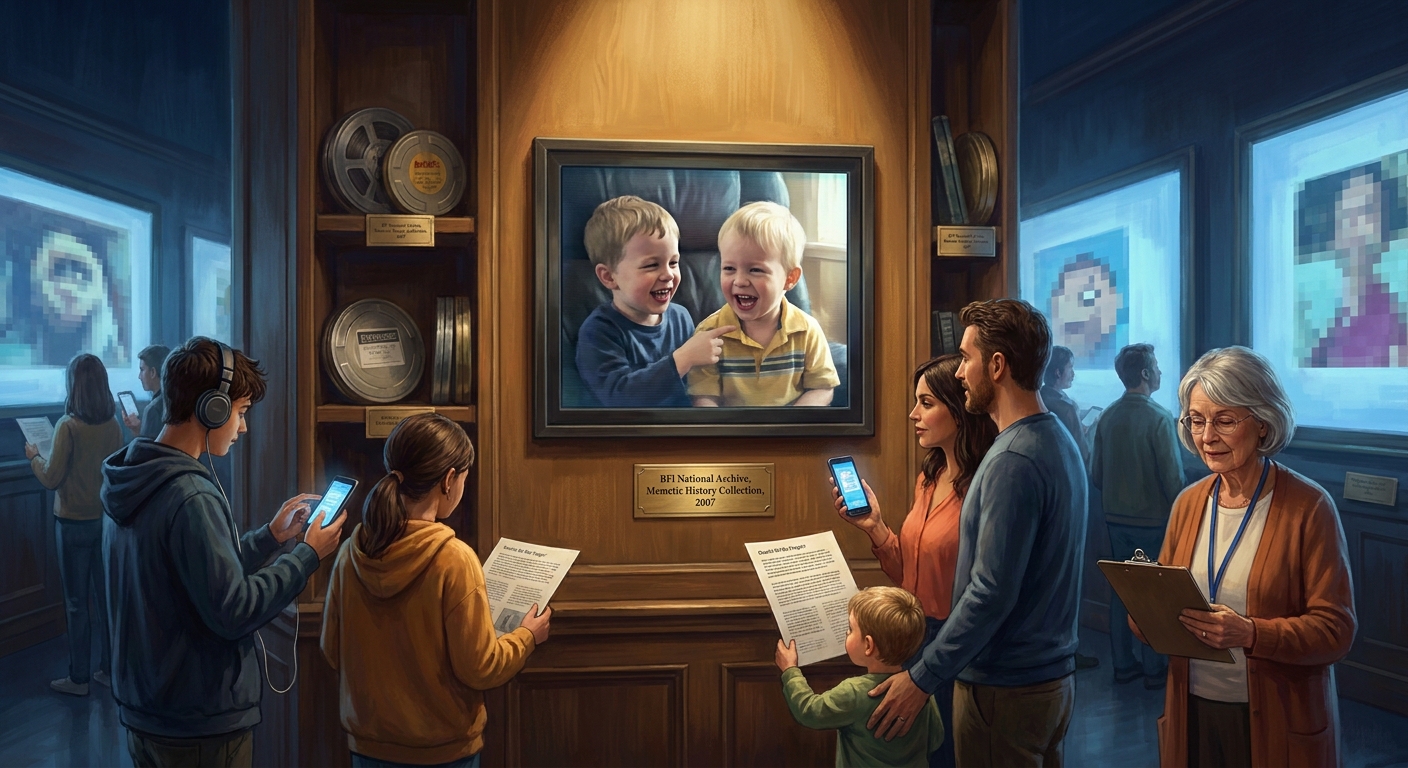
You scroll past so much internet junk in a day that it is easy to assume every old viral clip is just more background noise. That is why this one feels different. “Charlie Bit My Finger,” the 56-second home video of two brothers on a sofa, has been officially added to the British Film Institute’s new viral video archive. Yes, really. A clip many of us first saw in the early YouTube years is now being treated as part of cultural history, not just a meme with a catchy title. If that sounds a little surreal, it should. But it also makes sense. The video captured something the internet rarely improves on: a real moment, instantly funny, endlessly quotable, and shared across generations. The BFI’s choice says a lot about how online video has grown up, and why some clips stick around long after trends, apps, and reaction formats burn out.
⚡ In a Hurry? Key Takeaways
- The BFI has added “Charlie Bit My Finger” to its viral video archive, recognizing it as a real piece of internet history.
- If you want to understand why old clips keep resurfacing, look for the ones that feel human, simple, and easy to remember, not just trendy.
- This is a useful reminder that online videos are no longer disposable by default. Some are now being preserved like films and TV broadcasts.
What happened?
The short version is simple. The British Film Institute has included “Charlie Bit My Finger” in a new archive of more than 400 important viral videos. That means the clip is being preserved as part of the story of moving images in Britain.
For a lot of people, that sentence lands with a double take. This was not a studio production. It was not polished. It was not designed by marketers in a conference room. It was just a family moment uploaded online in 2007, and it exploded.
That is exactly why it matters.
Why this specific clip still matters
If you have somehow never seen it, the video shows baby Charlie biting his older brother Harry’s finger. Harry reacts with that now-famous line, and the whole thing lasts less than a minute. That is it. No edits. No soundtrack. No strategy.
But the internet latched onto it because it felt real. You did not need context. You did not need subtitles. You did not need to know the family. It was instantly understandable, funny, and oddly warm.
That made it one of the defining early YouTube clips. Back then, viral video was less about creators building brands and more about unexpected moments escaping into the wider web. “Charlie Bit My Finger” became shorthand for the early internet itself.
The bigger story: viral videos are becoming cultural artifacts
This is the part that is easy to miss when the headline makes you smile and move on. The BFI is not just saying this clip was popular. It is saying online video now belongs in the same wider conversation as film, television, and broadcast archives.
That is a big shift.
For years, viral videos were treated like digital confetti. Funny today, forgotten tomorrow. But archives exist to preserve the stuff that tells us who we were, what we watched, and how we communicated. In that light, “Charlie Bit My Finger” is not just a cute clip. It is evidence of a new era in media.
What the BFI means by a new age of moving images
The idea behind this archive is that we are now deep into a new phase of visual culture, one shaped by platforms like YouTube, TikTok, Instagram, and everything that came between. Some people call this the “third age” of moving images. First came cinema. Then broadcast TV. Now we have platform video, where anyone can upload, share, remix, and go viral.
That changes what counts as important.
A shaky home video can now carry more cultural weight than a glossy ad campaign. A 56-second family clip can say more about an era than a scripted TV special. That is what the BFI is recognizing.
Why “Charlie Bit My Finger” keeps coming back into your feed
There is also a practical reason this video still pops up. It fits the modern internet perfectly, even though it came from an earlier one.
It is short. It is quotable. It works with no setup. It sparks nostalgia. And it feels authentic in a way a lot of modern “viral” content tries very hard to fake.
That matters because people are tired of being pushed toward clips that look engineered for engagement. You know the kind. Loud thumbnail. Forced reaction. Three seconds of suspense stretched into 40. “Charlie Bit My Finger” is the opposite. It earns attention without asking for it.
What this says about today’s viral culture
The internet has changed, but our taste has not changed as much as we think. People still respond to moments that feel immediate and human. The tools got more advanced. The attention span got shorter. But the basic appeal is the same.
When an old clip like this gets archived, it gives you a better way to judge what you are seeing now. Ask a simple question: is this something people only watched because an algorithm shoved it in front of them, or is it something they would still remember years later?
That is a useful filter. Most trends vanish because they are built for speed. A few survive because they capture something true.
Why archives like this are useful for regular people, not just media historians
You do not need to be a film student to care about this. Archives help us make sense of our own habits. They show that the stuff we watch online is not separate from culture. It is culture.
That can make your daily scrolling feel a little less random. It also helps explain why certain clips become shared reference points. They are not just famous. They become part of how a generation remembers itself.
For parents, it is also a reminder that everyday family videos can end up meaning a lot more than expected. For younger readers, it is a neat history lesson about what virality looked like before every platform was packed with monetized creators and trend consultants.
So, was the BFI right to choose it?
Honestly, yes.
If the goal is to preserve videos that shaped online life, “Charlie Bit My Finger” is an easy pick. It was one of the most recognizable clips of the early YouTube era. It crossed countries and age groups. It was endlessly referenced. And unlike many viral hits, it still works when you watch it now.
That last part is important. A lot of old internet jokes expire on contact. This one does not.
At a Glance: Comparison
| Feature/Aspect | Details | Verdict |
|---|---|---|
| Why it was archived | It represents early YouTube culture, mass sharing, and the rise of user-made viral video. | A strong and sensible choice for the BFI viral video archive. |
| Why it still spreads | It is short, funny, authentic, and easy to understand without background. | Still more watchable than many modern “made to go viral” clips. |
| What it means for viewers | It shows that internet videos are now being preserved as part of real media history. | Useful reminder to look at viral content with a smarter, longer view. |
Conclusion
The nice thing about the “Charlie Bit My Finger BFI viral video archive” story is that it gives us a rare excuse to stop doom-scrolling for a second and notice what is happening. Viral videos are no longer being treated as throwaway internet clutter. Some are becoming part of the official record. That does not mean every meme is a masterpiece. It just means the web has been around long enough to have its own classics now. And this one, somehow, is still doing what all the best viral clips do. It makes people laugh, remember where they first saw it, and recognize a small human moment that outlasted the platform it helped define. That is worth preserving. It also gives you a better lens for the next thing in your feed that everyone suddenly claims you have to watch.