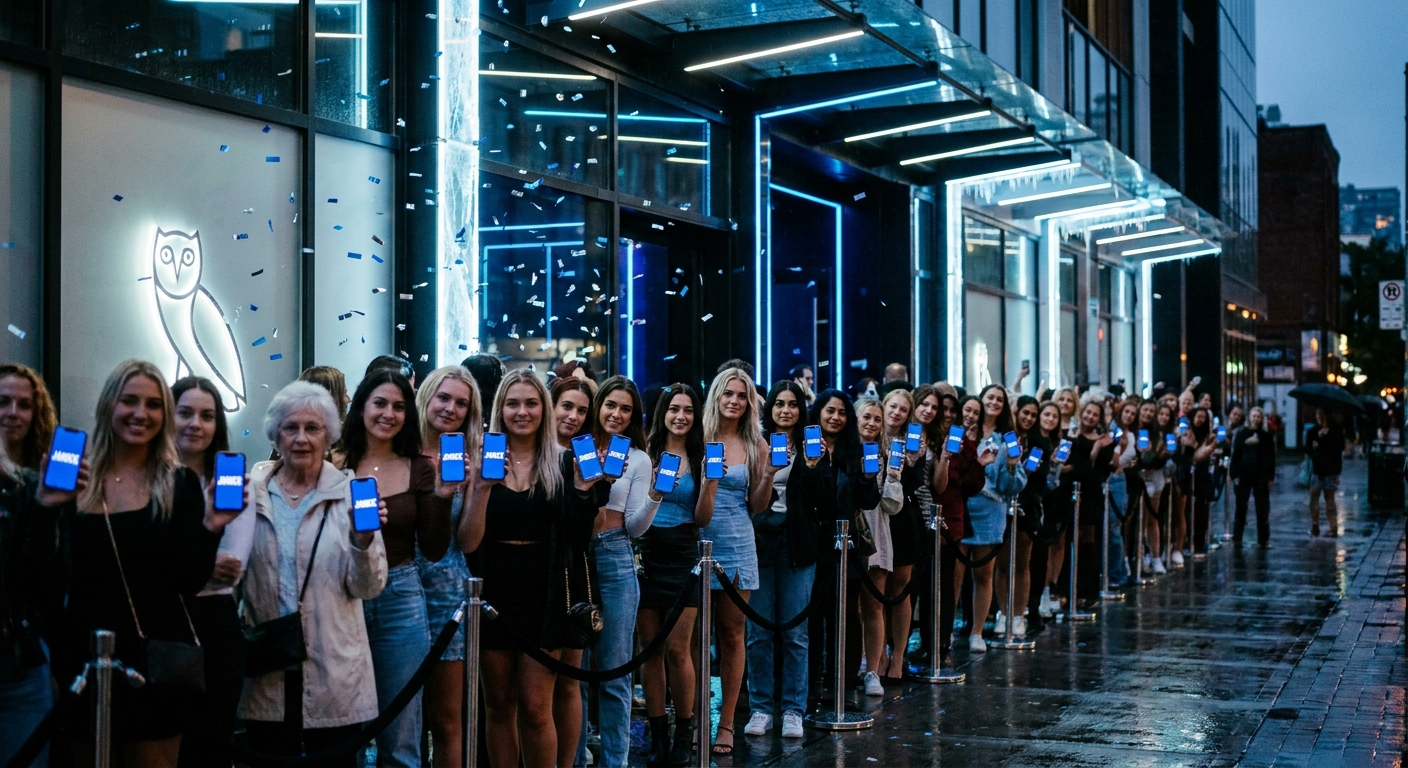
If you feel slightly annoyed that every week brings a new Drake clip designed to make the rest of us stare at our phones and say, “Wait, what is happening here,” you are not alone. The Drake Janice only party viral video is the latest example. A room full of women named Janice. An apology theme. A setup so oddly specific that it feels fake, brilliant, and deeply internet-brained all at once. That is exactly why it spread. People did not share it because they needed context. They shared it because the clip itself was the context. It sparked the perfect reaction loop. Confusion, laughter, disbelief, then a quick send to the group chat. If you make content, manage social accounts, or just want to understand why this nonsense keeps taking over your feed, this clip is actually useful. It shows how hyper-specific ideas now travel faster than broad, polished ones.
⚡ In a Hurry? Key Takeaways
- The Drake Janice only party viral video blew up because it mixed exclusivity, absurdity, and instant share value in one easy-to-understand clip.
- If you want posts to spread in 2026, start with a weirdly specific hook people can explain in one sentence.
- Do not copy stunts blindly. The lesson is the format, not the budget. Specificity works better than random chaos.
What actually happened with the Drake Janice only party viral video?
The version racing around social platforms shows what appears to be a Drake-hosted or Drake-themed apology party with an extremely narrow guest rule. Only women named Janice. That one detail did most of the work.
You do not need a long backstory to get why people stopped scrolling. The premise is the punchline. It sounds made up, yet the footage looks real enough to trigger debate. Was this a joke? A flex? A promo stunt? A private event built to become public content? The uncertainty made it stronger, not weaker.
That is the first big lesson here. On the internet, a clip does not always need complete clarity. It needs a clean story people can repeat fast.
Why this weird clip spread so fast
1. It is hyper-specific in a way your brain cannot ignore
“Party for women” is boring. “Janice-only apology party” is unforgettable. The smaller and stranger the rule, the more people want to inspect it. It feels custom-built for screenshots and reaction videos.
That kind of specificity gives people an easy opening line when they share it. “Have you seen the Drake Janice thing?” That matters more than a lot of creators realize.
2. It creates instant FOMO
Exclusivity still works, especially fake-seeming exclusivity. Most viewers were never going to be at this party. That is the point. The clip turns exclusion into entertainment.
People love peeking into a room they were not invited into, especially when the invite rule sounds like a joke from a TV writer’s room.
3. It looks casual, which makes it feel more real
Shaky vertical video still wins because it feels like evidence. A polished trailer would have landed as marketing. A messy phone clip lands as discovery.
That difference is huge. Audiences trust accidental-looking footage more than obviously staged promotion, even when both are carefully planned.
4. It invites argument without needing facts
One side sees genius marketing. Another sees a simulation glitch. Someone else thinks it is embarrassing. Perfect. Content that gives people a low-stakes reason to argue almost always gets extra life.
It is not serious enough to be exhausting, but it is strange enough to provoke a take. That is the sweet spot.
What this says about internet culture right now
The Drake Janice only party viral video is less about Drake and more about the current rules of attention.
We are living in an era where broad appeal is often weaker than narrow absurdity. A clip does not need to reach everyone equally. It needs to hit one emotional button hard enough that viewers become distributors. In this case, the buttons were confusion, envy, and comedy.
There is also a bigger pattern here. Online culture keeps rewarding moments that feel both exclusive and instantly legible. You should be able to understand the gimmick in three seconds, then spend the next 30 seconds trying to decide whether it is smart or ridiculous.
That tension is what keeps people watching.
Why creators and social managers should pay attention
If you run a brand account, make videos, or post for a living, this clip is a better lesson than another recycled thread about “best posting times.” Timing still matters a little. Format and premise matter more.
Here is the cheat sheet hidden inside this viral moment.
Make the concept explainable in one sentence
If someone cannot summarize your post to a friend immediately, it is harder to spread. “Drake threw a Janice-only apology party” is clumsy as a real-world sentence, but excellent as a viral one.
Use a rule people can latch onto
The strongest viral ideas often have a simple rule. Only Janices. Only one color. Only people born on one day. The rule is the handle. It gives the audience something to grab.
Leave just enough mystery
You do not need to answer every question. In fact, you probably should not. If the audience can fully process a clip in two seconds, they move on. If they need to argue over whether it is real, smart, dumb, or both, they stay.
Make it feel like a found moment
This is where many teams mess up. They copy the idea but overshoot on production. The internet often rewards content that feels captured, not announced.
How to use this idea without becoming unbearably try-hard
Not every brand should throw its own Janice-only event. Please do not make your local dentist’s office host a Trevor-only whitening night.
The smarter move is to borrow the structure, not the surface gimmick.
Good version
Pick one oddly specific audience or condition and build a post around it. “People who still have 37 tabs open.” “Only left-handed gamers.” “Everyone who still uses wired earbuds.”
Bad version
Throw random words together and hope absurdity does the rest. Specific is not the same as meaningless. The idea still needs an emotional trigger, usually recognition, envy, confusion, or humor.
Best practice
Ask one question before posting. Can a stranger explain why this is funny or interesting without reading a long caption? If not, tighten the concept.
Should you trust everything you see in clips like this?
Not fully. And that is part of the modern game.
Viral event clips are often designed with reposting in mind. Even when something happened in real life, the version you see online may be trimmed, framed, or selectively shot to make the idea hit harder. That does not make it fake. It just means it is content first and documentation second.
For casual viewers, that is a good reminder not to overinvest in the mythology. For creators, it is proof that packaging matters as much as the event itself.
What regular people can learn from it too
You do not need a content calendar to get something useful out of this. If you post for fun, the takeaway is simple. The internet responds to point of view more than polish.
The friends who get the most shares are usually not posting “better” in a technical sense. They are posting things with a clean angle. A strange observation. A very specific joke. A tiny detail everybody recognizes once they see it.
That is why this clip worked. It was not just a party video. It was a party video with a built-in sentence attached.
At a Glance: Comparison
| Feature/Aspect | Details | Verdict |
|---|---|---|
| Core hook | A party restricted to women named Janice, framed like an apology or ultra-specific invite-only moment. | Excellent viral premise because it is bizarre and easy to repeat. |
| Shareability | People can send it with almost no explanation beyond “What am I watching?” | Very high. Confusion plus humor still travels fast. |
| Lesson for creators | Use a weirdly specific angle, a simple rule, and footage that feels found rather than overproduced. | Worth copying in structure, not in exact stunt. |
Conclusion
The reason the Drake Janice only party viral video stuck is not complicated. It packages today’s internet habits into one neat little chaos ball. Hyper-personalized stunt. Manufactured exclusivity. Just enough absurdity that people feel compelled to show someone else. That is why this matters beyond celebrity gossip. It gives creators, social managers, and regular posters a very current cheat sheet for what spreads in 2026. Not perfect lighting. Not generic “engagement tips.” A specific idea, a clear hook, and a clip people can explain in one breath. If you understand that, you are already reading the room better than a lot of polished campaigns.