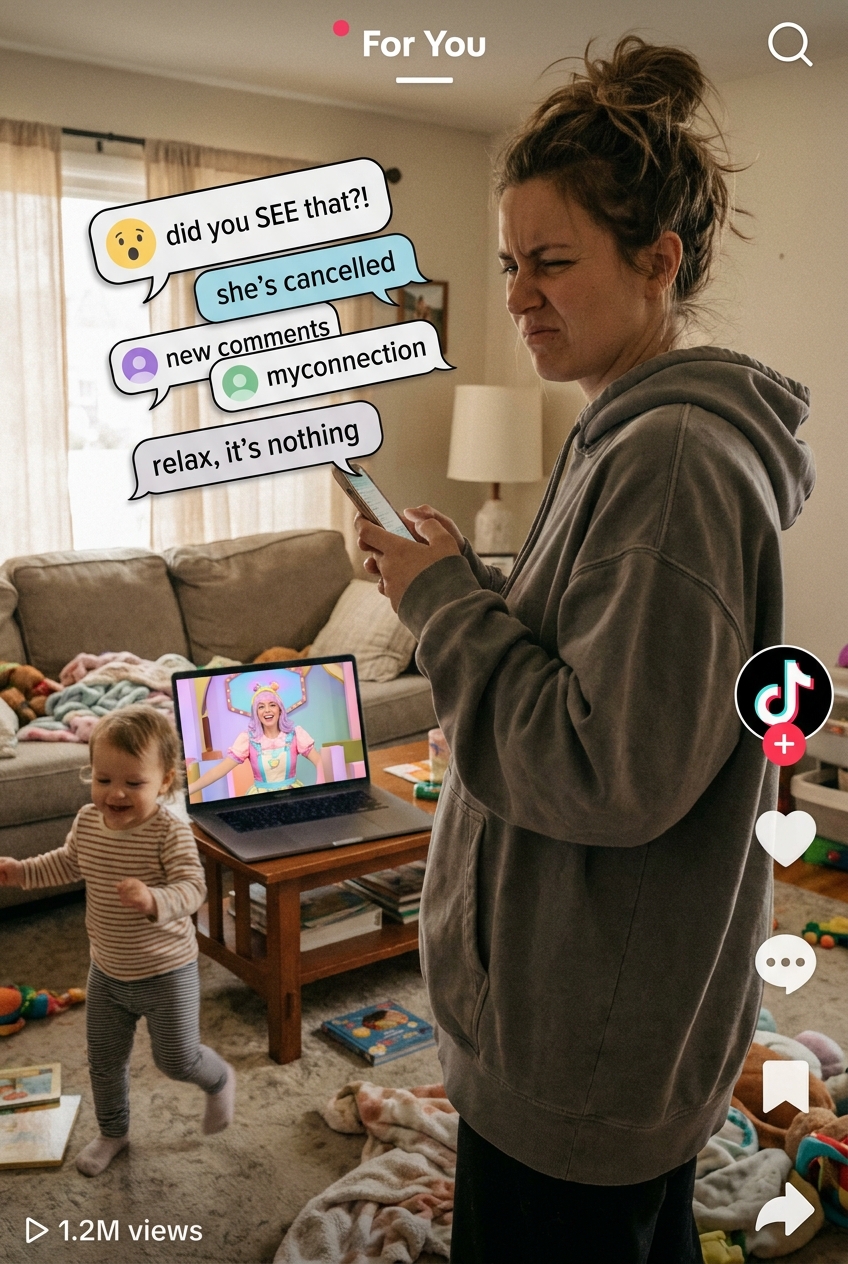
You open TikTok looking for a safe, familiar Ms Rachel clip so your kid can sing along for ten minutes, and somehow the app turns it into a full-blown investigation of her shirt. That’s the exhausting part. Parents are not asking for frame-by-frame body scrutiny when they just want children’s content. The latest fuss around the Ms Rachel viral TikTok nipple piercing video is a perfect example of how fast a harmless visual detail can get ripped out of context and turned into a weird moral panic. What people are treating like a shocking reveal appears to be nothing more than a brief clothing crease, shadow, or compression artifact in a split-second frame. In other words, the internet saw something for half a second, filled in the blanks, and then acted very sure of itself. If you felt annoyed, grossed out, or just plain tired by the whole thing, you are not overreacting. The discourse really did lose the plot.
⚡ In a Hurry? Key Takeaways
- There is no solid evidence that the viral clip shows a nipple piercing. The most likely explanation is fabric, lighting, motion, or video compression.
- Before sharing panic posts about kids’ content, pause the clip, watch the full video, and ask whether the claim holds up outside one frozen frame.
- The real safety lesson is not “panic faster.” It is learning how to spot actual red flags without getting dragged into crowd-made nonsense.
What actually happened with the clip?
The short version is simple. A frame from a Ms Rachel video spread across TikTok and other social apps. Some viewers zoomed in on her chest area and claimed they saw a nipple piercing through her top. From there, the usual viral cycle kicked in.
One person posts a suspicious screenshot. Another adds outrage. A third says, “Why is nobody talking about this?” Then suddenly thousands of people are staring at a low-quality freeze frame like they’re solving a crime.
That does not make the claim true. It just means the algorithm found a topic people could not stop looking at.
Why people think they saw something
Human brains are pattern machines. We are built to spot shapes fast, even when the signal is messy. That helps when you are driving in fog. It does not help much when you are pausing a compressed social video at exactly the wrong millisecond.
Three boring explanations that fit better than the rumor
1. Fabric bunching. Shirts fold in odd ways, especially on moving video. A seam, wrinkle, or stretched spot can create a shape that looks more dramatic in a freeze frame than it does in motion.
2. Lighting and shadow. Bright studio lighting, phone camera exposure, and contrast filters can exaggerate tiny details. What looks like a defined object may just be a highlight and shadow meeting in an unlucky spot.
3. Compression artifacts. TikTok, reposts, screen recordings, and re-uploads all chew up video quality. Compression can sharpen edges, flatten colors, and invent weird visual blobs that were not noticeable in the original footage.
So, is there any reason to think the rumor is real?
Based on the viral clip itself, no. There is no reliable evidence here. No clear confirmation. No consistent visual proof across angles. No context suggesting the video was intentionally inappropriate.
What there is, unfortunately, is a lot of overconfidence. People often mistake “I saw a screenshot on my feed” for “this has been established as fact.” Those are not the same thing.
And with children’s content, emotions run hot for understandable reasons. Parents want to protect their kids. That protective instinct is good. But it also makes people easier to bait with misleading claims.
Why this kind of rumor spreads so fast
Because it checks every box the internet loves.
It mixes kids, scandal, and outrage
That is algorithm catnip. A rumor tied to a well-known children’s creator gets immediate attention because people feel like they need to weigh in right now.
It rewards people for reacting before thinking
Social feeds do not hand out trophies for patience. They reward speed, shock, and certainty. The person who says “hang on, let’s check the original clip” almost never gets the most views.
It turns normal viewers into amateur detectives
Once a claim starts trending, everyone becomes a forensic analyst with a pause button. That can create a false sense that “lots of people examining it” equals truth. Sometimes it just means lots of people are stuck in the same rumor loop.
How to tell the difference between a real red flag and viral paranoia
This is the part that actually helps.
Look for pattern, not one weird frame
Real concerns in kids’ content usually show up more than once. They have a pattern. Repeated language. Repeated imagery. Repeated behavior. A single odd still image is weak evidence on its own.
Check the full clip, not the cropped outrage post
A lot of these scandals fall apart the second you watch the original video at normal speed. Context matters. Motion matters. Sound matters.
Ask whether the claim depends on zooming in too far
If someone has to circle a blurry patch, freeze it, zoom it 400 percent, and tell you what to think, that is your cue to slow down.
Watch for people skipping straight to motive
“This was intentional.” “She knew what she was doing.” “They’re hiding it in plain sight.” Those are huge claims. If the evidence is just one unclear frame, the motive talk is doing way too much work.
What parents should do if a clip makes them uncomfortable
You do not have to ignore your instincts. You just do not have to let TikTok set your heart rate either.
Here’s a good rule of thumb:
- Watch the original clip from the source if possible.
- View it at normal speed first.
- Then replay only if something still seems off.
- Check whether trusted coverage shows the same concern with context.
- If you still do not like it, skip it. You do not need a jury verdict to choose different content for your home.
That last point matters. Parents do not need to prove a global conspiracy or debunk one before deciding what to put on screen. You are allowed to be selective without becoming part of the panic machine.
The bigger issue is how social apps warp normal judgment
This story is less about Ms Rachel and more about what platforms do to our brains. They flatten everything into a reaction contest. A harmless moment gets sexualized. A low-quality frame becomes “evidence.” Then everyone is pushed to pick a side before they have even figured out what they are looking at.
That is not healthy media literacy. That is just chaos with autoplay.
And for parents, it is especially frustrating because the feed does not care why you clicked. You may tap a post because you are worried, annoyed, or trying to fact-check it. The app reads that as interest and sends you ten more versions.
At a Glance: Comparison
| Feature/Aspect | Details | Verdict |
|---|---|---|
| Visual evidence | A brief, unclear frame interpreted by viewers as showing a piercing | Weak evidence. More likely fabric, lighting, or compression. |
| Context of the video | Children’s educational content with no clear pattern of inappropriate material | Does not support the scandal narrative. |
| Best response for parents | Check the original clip, avoid rage-sharing, and judge based on patterns not panic posts | Most practical and least stressful approach. |
Conclusion
Today’s Ms Rachel nipple-piercing rumor is a textbook example of how a harmless, split-second frame can send the internet straight into moral panic before anybody stops to ask the obvious question. What are we actually looking at? In this case, the answer appears to be a fuzzy visual detail that got wildly overinterpreted. The useful takeaway is not just that this specific claim looks flimsy. It is that parents, teachers, and everyday viewers need a better filter than whatever TikTok serves up next. Slow down. Watch the full clip. Look for patterns. Be careful about turning one blurry frame into a character verdict. That is how you separate real red flags in kids’ content from crowd-driven paranoia, and keep your own viral BS detector a little sharper the next time the feed loses its mind.