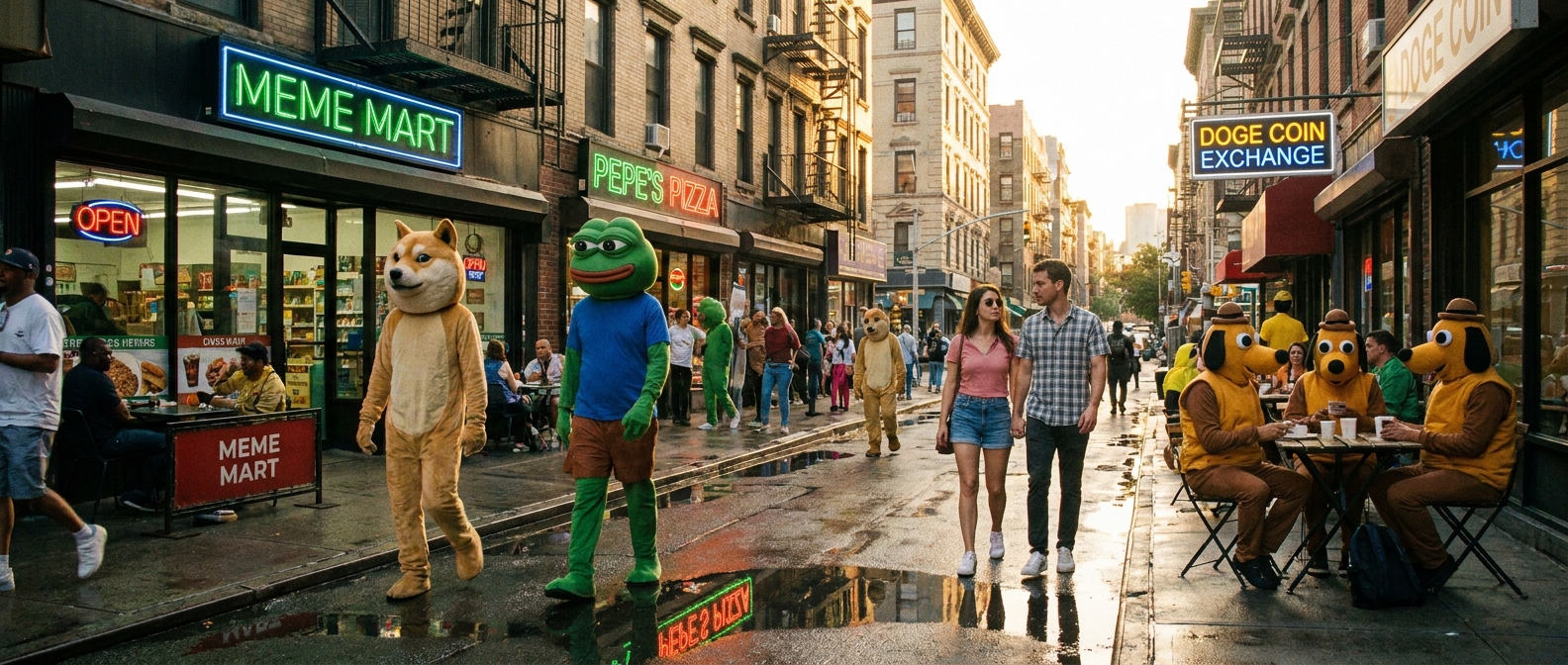
Your feed is probably full of the same stuff right now. Weird AI babies. Fake movie trailers. Random “brainrot” edits that feel like they were made by a machine for another machine. So when one clip actually makes people stop, replay, and say “hold on, is that every meme from the last two years walking down one New York block?” it stands out fast. That is exactly what happened with the ai generated new york meme street viral video now bouncing across Instagram Reels, TikTok, and X. It feels less like disposable AI sludge and more like someone turned the internet into a crowded Manhattan sidewalk for 15 seconds. The fun is not just that it is chaotic. It is that the chaos is recognizable. Every corner seems to hide another character you swear you have seen on your feed before. If you only watched it once and moved on, you missed why people are sharing it so hard.
⚡ In a Hurry? Key Takeaways
- This viral clip is blowing up because it turns scattered internet memes into one shared “place,” which makes it feel more clever than the average AI post.
- Pause and replay it. The whole appeal is spotting the blink-and-you-miss-it references packed into the street scene.
- It is a good example of why some AI videos break through even during an AI backlash. People will forgive the fake look if the idea feels genuinely funny.
What the video actually is
At the simplest level, it is an AI-made street scene set in New York. But that undersells it.
The clip works because it is built like a visual scavenger hunt. Instead of one joke, it stacks a whole pile of internet jokes into a single moving shot. Think meme characters, brainrot creatures, familiar reaction-face energy, and “wait, I know that one” cameos all jammed together like they are heading to the same block party.
That is why people keep rewatching it. The first watch gets a laugh. The second watch becomes a search mission.
Why this one feels different from regular AI slop
Most low-effort AI clips die the same way they are born. Fast. You look, register “yeah, a bot made this,” then scroll on. They may be technically flashy, but they are empty.
This one has an actual hook. It takes a feeling most internet-heavy people already have, that their feeds are one giant soup of repeated characters and in-jokes, then makes that soup physical. Suddenly all those disconnected posts live on one NYC street.
That is the trick. It gives form to the mess in your head.
It turns the feed into a real location
The best part of the reel is that it answers a goofy question nobody asked out loud but a lot of people instantly understand. What if the whole internet moved into one neighborhood?
That idea is much stronger than “look, AI can animate a strange thing.” It is closer to world-building. Even if the details are absurd, the concept lands right away.
It rewards people who are too online
There is also a tiny status game built into it. Spotting references makes viewers feel in on the joke. Missing them makes you want to go to the comments and compare notes.
That is gold for social platforms. People do not just share the video. They share their own decoding of it.
The blink-and-you-miss-it appeal
If you have only seen reposts, you probably caught the broad joke but not the specific little hits. That is what gives the video legs.
Clips like this spread because they are layered. One person reposts it for the spectacle. Another reposts it because they spotted a favorite meme in the background. Another shares it to ask friends, “Did you catch that part at the corner?”
It creates conversation without needing a long caption. That is rare.
Why naming the references matters
This is where the video stops being “just another AI thing.” Internet culture runs on recognition. When viewers can identify characters, formats, or visual callbacks, the clip starts to feel curated instead of random.
Even when the references are mashed together or slightly distorted by AI, your brain fills in the gap. You do not need perfect accuracy. You just need the hit of familiarity.
Why it is blowing up during an AI backlash
Right now, plenty of people are tired of synthetic content. Fair enough. A lot of it is lazy, ugly, or emotionally flat. So it is worth asking why an AI video is getting love instead of eye-rolls.
The answer is simple. People are not reacting to the tool first. They are reacting to the joke first.
When AI is used like a shortcut with no idea behind it, audiences can smell it. When it is used to build a surreal scene that would be hard to make any other way, people are more willing to play along.
It feels like a shared joke, not a content farm
That difference matters. The reel does not come off like it was made to fill a quota. It feels like someone had one very online thought and followed it through to the funniest version.
That is why even people who usually complain about AI slop are still sending it to friends with a “okay, this one got me.”
How to watch it if you want to get more out of it
You do not need a film studies degree here. Just slow down a little.
1. Watch once for the overall joke
On the first play, do not stress about catching everything. Just let the absurdity land. The point is seeing the internet flattened into one crowded street.
2. Watch again and scan the edges
The center of the frame is not the whole show. Background details are doing a lot of work. Many of the best references are placed where your eye would not naturally linger on a first pass.
3. Read the comments like a decoder ring
Usually comments are a mess. Here, they are part of the fun. People compare sightings, argue about what they saw, and help fill in what the AI blurred together.
That turns the clip into a group project, which is another reason it keeps circulating.
What this says about meme culture right now
The video is also a snapshot of a bigger shift. We no longer experience memes one at a time. We experience them as a nonstop pileup. Old reaction images, new surreal creatures, remix formats, AI weirdness, nostalgia bait. It all arrives in the same stream.
This reel captures that overload in a way that feels accurate instead of annoying. It is cluttered on purpose. That is what makes it feel true to the internet in 2026.
And yes, there is something a little comforting about it too. In the middle of algorithm mush, one clip briefly made everyone look at the same thing and laugh at the same dense pile of nonsense.
Should you care if it is “good art” or just good content?
Honestly, not that much.
You do not need to crown it a masterpiece to understand why it works. It is a sharp, shareable piece of internet culture. That is enough. The more useful question is whether it gave people something more than a two-second shrug.
It did. It created recognition, conversation, and replay value. Compared with most AI posts, that is a pretty high bar.
At a Glance: Comparison
| Feature/Aspect | Details | Verdict |
|---|---|---|
| Core concept | An AI-generated New York street packed with recognizable meme energy and internet characters | Strong. Easy to understand in seconds |
| Replay value | High because viewers keep pausing to catch background references and compare notes | Much better than average AI feed filler |
| Why it went viral | It feels like a shared online inside joke at a time when people are tired of empty AI spectacle | Right idea, right timing |
Conclusion
The reason this ai generated new york meme street viral video is hitting so hard is not just that it is strange. The internet is full of strange. It is that this one turns a messy, repetitive online experience into something people can instantly recognize, replay, and talk about. Instead of giving you one more forgettable AI clip to half-watch while brushing past it, it gives you a compact map of your whole feed in one fever-dream block. That is why it is moving across TikTok, Reels, and X so fast. If you slow down, spot the references, and understand why people are reacting to it differently from the usual AI sludge, you get more than a quick “lol that’s wild.” You get the context. And that context is exactly the kind of thing that makes you sound like the person in the group chat who actually knows what everyone is looking at.